
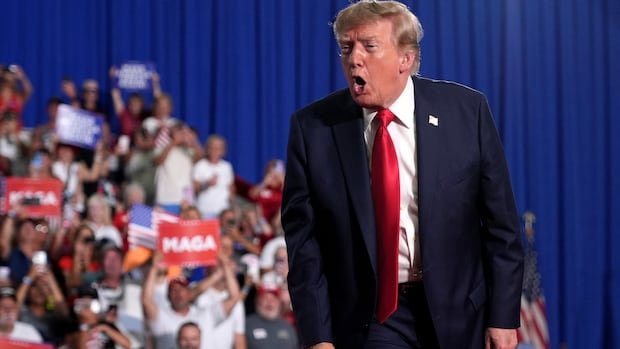

Members of the Canadian auto industry are expressing a range of emotions in response to the recent threats made by U.S. President Donald Trump to double certain American tariffs on vehicles, auto parts, and steel from Canada. Following Canada’s rejection of a U.S. trade proposal, Trump announced on Truth Social that tariffs would increase to 50 percent from current levels by January 1, 2027.
Lucas Malinowski, the CEO of Global Automakers of Canada, voiced uncertainty regarding the seriousness of Trump’s statement. He noted that past outbursts like this have not always resulted in changes to tariff and trade policies, and the industry is waiting to see if this threat materializes. Global Automakers of Canada represents major foreign automakers such as Toyota, Volkswagen, BMW, Honda, Hyundai, Nissan, and Mercedes-Benz.
Trump’s threat to raise tariffs marks the latest development in the Canada-U.S. trade confrontation since negotiations collapsed prior to the deadline to avoid significant tariffs on Canadian goods. Prime Minister Mark Carney pledged to match American tariffs “dollar for dollar” after September 8, focusing on various sectors including steel, dairy, appliances, agricultural equipment, pulp and paper, and electronics.
In response to Trump’s criticism of Canada, Flavio Volpe, president of the Automotive Parts Manufacturers’ Association, clarified that the increased tariffs would impact the U.S. auto industry, not Canadians. He emphasized that the importer of record bears the cost of tariffs, meaning U.S. auto assembly would shoulder the burden of the proposed higher tariffs.
The escalating trade tensions have already taken a toll on the auto industry, with Malinowski highlighting a significant decrease in U.S. car exports to Canada and estimating that trade disruptions have added $110 billion in costs to the North American auto sector over the past year and a half. Ontario Premier Doug Ford condemned Trump’s tariff threat, labeling him as a bully and vowing to stand firm against such actions.