

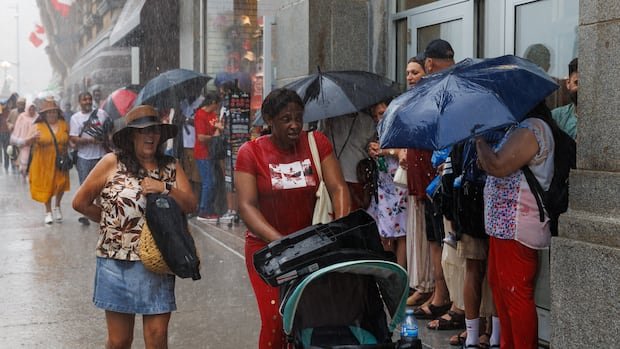

This summer, Canada is experiencing a wide range of extreme weather conditions across various regions. Western Canada has been hit by intense storms leading to severe flooding, particularly in Manitoba. Heat waves and thunderstorm watches have affected parts of Ontario, Quebec, and British Columbia, while wildfires have been a major concern in the North.
Recently, a storm wreaked havoc in southwest Winnipeg, causing significant damage to properties. Kingston, Ontario, was briefly under a tornado warning, and Canada Day celebrations in Ottawa were canceled due to thunderstorms and flooding.
Meteorologist Jennifer Smith from Environment and Climate Change Canada noted the unusual weather patterns. Experts are closely monitoring the effects of the jet stream and El Niño on this year’s weather. The jet stream, a high-altitude air boundary that separates cold air from the north and warm air from the south, can lead to extreme weather events if it becomes stagnant in a specific position.
Transitioning from colder La Niña years to a strong El Niño is contributing to the current chaotic weather conditions in Canada. The predicted “super” El Niño is expected to worsen extreme weather patterns, potentially causing severe droughts and heavy rainfall in different regions. However, in Canada, this phenomenon typically results in milder winters and fewer hurricanes in the Atlantic region.
Moving forward, Western Canada is forecasted to experience consistently warm and dry weather, with the Prairies unlikely to face drought conditions. While temperatures may cool down in the Great Lakes and Maritimes, unpredictable weather patterns suggest that the roller coaster of extreme weather is far from over.
Experts emphasize the importance of staying informed and taking necessary precautions during extreme weather events. Climate change is also a significant factor influencing the intensity and frequency of extreme weather in Canada. While there is no direct link between global warming and El Niño, the warming atmosphere may amplify the impacts of these natural events.
As Canadians navigate through this turbulent summer, understanding the complex relationship between various environmental factors is crucial in preparing for future weather challenges.