


Operations at the Cigar Lake uranium mine in northern Saskatchewan have been halted temporarily due to processing disruptions at Orano’s McClean Lake uranium processing mill, as reported by Canadian uranium supplier Cameco Corp.
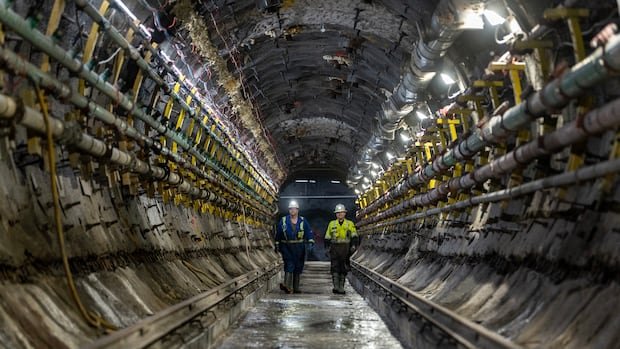
Cessa Fern’s workday kicks off with squeezing into a metal cage with 19 others, plunging to a depth exceeding the Empire State Building’s height into a dark environment of rock walls, pipes, and wires where uranium is extracted.
Initially hesitant about the job, Fern vividly recalls her trepidation before her first descent underground. Despite her initial reluctance, the 18-year-old eventually descended into the mine, encountering further challenges.
At a recent mine tour, Fern, along with over 400 employees and contractors at Cameco’s Cigar Lake mine, shared insights into their daily tasks in the boreal forest located 660 kilometers northeast of Saskatoon, housing the world’s most abundant uranium deposit.
Descending via a cage-like elevator into a labyrinth of tunnels within grey bedrock, workers navigate through the mine’s infrastructure, utilizing specialized machinery like the jet boring system to extract uranium without direct contact due to its radioactivity.
Monitoring radiation levels closely, workers maintain safety protocols, with indicators signaling any potential hazards. Despite working in a male-dominated industry, Taryn Roske, the sole female operator of the jet boring system, emphasizes proving her capabilities in her role.
The arduous work schedule involves 13-hour shifts underground, with employees alternating between two-week work periods and off-site breaks. The mining camp provides amenities like meals, recreational activities, and access to nearby Waterbury Lake for leisure.
For Fern, whose family has multi-generational ties to the mine, the experience has been a source of inspiration and understanding of the industry’s importance in the region. Victor Sr., Fern’s grandfather, emphasizes the limited job opportunities in northern Saskatchewan, highlighting the significance of mining employment.
Once the uranium concentrate, known as “yellowcake,” is extracted, it is processed at a nearby mill before being distributed globally for nuclear power generation, underscoring Canada’s role as a significant uranium producer.
Cameco’s commitment to collaboration with Indigenous communities and environmental stewardship is evident through various agreements focusing on job creation, sustainable development, and resource conservation.
Ensuring responsible water usage and waste management practices, the company treats and tests mining water before returning it to Waterbury Lake, while radiologically contaminated waste is securely stored and repurposed within the mining infrastructure.
Maintaining a focus on environmental protection and community engagement, Cameco emphasizes its adherence to treaty obligations and ethical practices, demonstrating a commitment to sustainable mining operations in the region.