

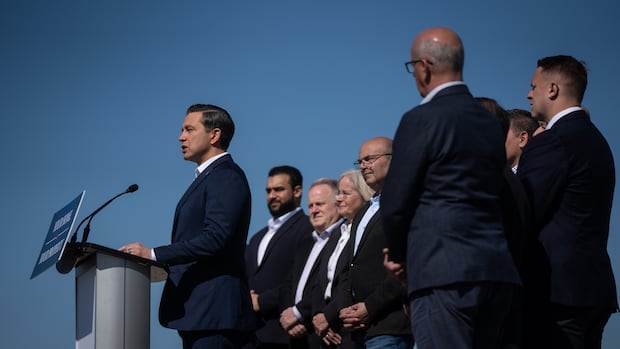

Following the departure of another MP to the Liberal Party, Conservative Leader Pierre Poilievre expressed his support for recall petitions, which would allow constituents to remove their representative with sufficient local backing.
“When an MP reneges on their commitment to their constituents by switching parties, the electorate should have the option to initiate a petition for their removal and prompt a byelection,” he stated at a Thursday news conference.
“This would restore power to the people in our democracy, rather than relying on corrupt backroom arrangements.”
On Wednesday, Marilyn Gladu, an MP from Southwestern Ontario, left the Conservative Party to join the Liberals, marking the fourth such instance of a Conservative crossing the floor since November.

Following Marilyn Gladu’s decision to join the Liberal government, Opposition Leader Pierre Poilievre stated that constituents in her riding, as well as others, should be able to petition for a byelection whenever an MP changes parties.
In Alberta, voters can reassess their provincial representatives between elections. A petition must gather at least 60 percent of the votes from the candidate’s previous election for a constituency-wide vote to decide if they should retain their position. If the member loses, a byelection follows.
Currently, there is no similar process for constituents to compel their federal representatives to face a byelection.
Poilievre and other Conservative MPs have previously opposed legislation that would automatically require MPs to undergo a byelection upon changing parties. When asked if his voting stance might differ now, he mentioned that the decision would rest with the caucus, while he individually endorses the petition approach.
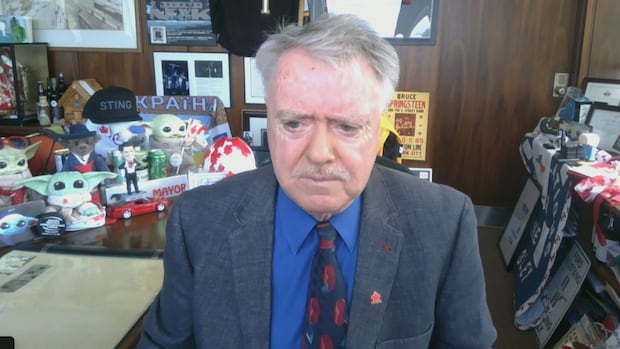
Sarnia Mayor Mike Bradley has urged Prime Minister Mark Carney to initiate a byelection after Marilyn Gladu’s shift to the Liberal government. He expressed that Gladu’s supporters feel “very betrayed” by her party change, yet hopes the government will address the city’s requirements.
While discussing property rights in Richmond, B.C., Poilievre began his address by commenting on Gladu’s transition to Prime Minister Mark Carney’s party.
“Mark Carney is conveying to Canadians that their votes hold no significance,” Poilievre remarked.
“I empathize with Ms. Gladu’s constituents, the vast majority of whom endorsed our Conservative vision.”
-
Former Conservative MP Marilyn Gladu crosses over to the Liberals
-
Analysis
Carney’s Liberals gain support from unexpected sources
-
Floor-crossers align with core Liberal principles, according to Carney
Two sources from the Liberal Party, speaking anonymously, indicated to CBC News that discussions are ongoing with nearly nine additional MPs regarding possible party switches.
Poilievre dismissed the notion of further MPs crossing the floor as mere “rumors” and reiterated his commitment to lead the Conservatives into the upcoming election, citing the 87 percent approval he received from party members to continue as leader.
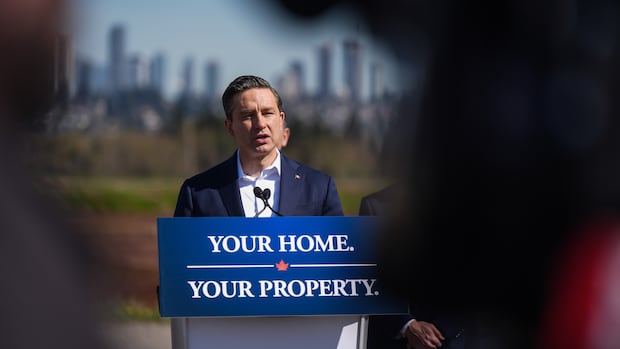
After losing a fourth MP to the Liberal government, Opposition Leader Pierre Poilievre was questioned about his leadership. He asserted, ‘Our mandate and my leadership does not stem from corrupt backroom deals; it comes from the Canadian people.’
“My authority does not derive from corrupt backroom dealings,” he stated.
Poilievre was accompanied by several Conservative MPs, which he interpreted as a demonstration of his party’s unity.
As reported by the Toronto Star last week, Poilievre’s office dispatched letters to critical MPs requesting they justify their roles. Two Conservative insiders informed CBC News that the letters were poorly received and could have been communicated more effectively. They described the caucus as feeling demoralized.
Carney responds to questions about his new MP
Poilievre was not the only one facing inquiries regarding Gladu’s party switch on Thursday.
Historically, Gladu has been seen as a social conservative. She openly opposed the Liberal government’s move to legalize cannabis and initially resisted a Liberal bill aimed at prohibiting conversion therapy, later clarifying her strong opposition to conversion therapy and her support for the LGBTQ+ community.
During her 2020 campaign for the Conservative leadership, she indicated she would permit caucus members to propose private member’s bills to limit abortion, although she acknowledged that broad support for such measures might be lacking.
At a previous news conference, Carney was queried about his new MP’s stance on abortion and 2SLGBTQ+ rights.
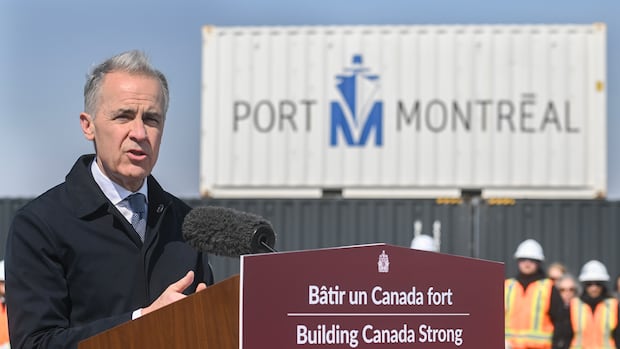
Prime Minister Mark Carney stated that Marilyn Gladu, who crossed from the Conservatives, will align with the government on any votes related to abortion and other social issues. Carney assured that discussions regarding these matters had taken place with the new Liberal MP.
The prime minister affirmed that any MP who joins the Liberal Party must align with its principles on these topics.
“The Liberal Party will always uphold women’s right to choose — unequivocally and without question. I have had discussions with Ms. Gladu and my colleagues regarding these matters,” Carney stated.
“She will vote with the government on any aspect of that issue [abortion], as well as on the rights of Canadians to express their true selves, to love whom they choose, and to fully enjoy their rights.”
Carney also emphasized the importance of diverse viewpoints within the Liberal caucus.
“Our country is vast and diverse,” Carney noted, adding that the recent floor-crossers have introduced “a range of perspectives and expertise that is benefiting … the government and the nation during a pivotal time.”
In addition to the four former Conservatives who have joined the Liberals, last month saw the transition of former NDP MP Lori Idlout to the governing party.
With Gladu’s switch, the Liberals now hold 171 seats, just one short of the 172 needed for a slim majority when all House of Commons seats are filled.
As the Speaker is a Liberal MP and traditionally votes in certain ways during ties, Carney’s party would find it easier to manage House proceedings if they reach 173 seats.
Three forthcoming byelections are expected to help the Liberals achieve that target.
The University-Rosedale and Scarborough Southwest ridings in Toronto are regarded as secure Liberal territories, while the Quebec riding of Terrebonne was narrowly won by the Liberals by just a single vote in the spring 2025 election.
All three byelections are scheduled for Monday, coinciding with the House’s return after a two-week spring break.