

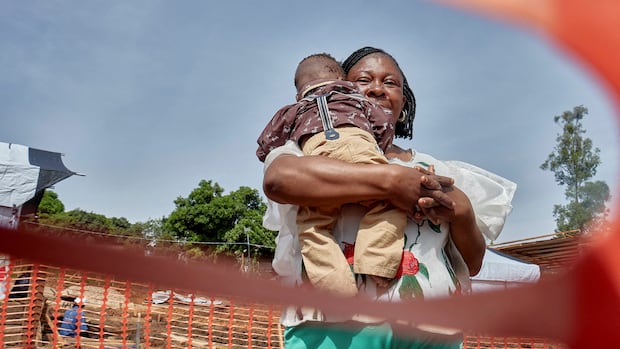

Officials have reported that the number of confirmed cases in the Ebola outbreak in eastern Congo has reached 1,003, with 254 fatalities, as tracking individuals who have been in contact with patients remains a significant challenge.
Congo’s Ministry of Health stated on Sunday that 100 individuals have recovered from the outbreak, which is primarily affecting the Ituri province since it was declared on May 15. Currently, at least 365 patients are either hospitalized or in isolation.
This Ebola outbreak has been unprecedented in its initial month, being caused by the rare Bundibugyo virus, for which there are no available vaccines or treatments. Authorities acknowledge the possibility of many more unreported cases and warn that the peak of the outbreak may still be forthcoming.
Contact tracing is a critical issue for local officials, who have only managed to achieve a coverage rate of 55 percent, according to the ministry.
Dr. Jean Kaseya, director general of the Africa Centers for Disease Control and Prevention, emphasized to The Associated Press last week, “To manage an outbreak, especially an Ebola outbreak, understanding the index case is essential. We lack confidence in determining when this outbreak began.”

CBC’s Eli Glasner asked a doctor working on the front line of the Ebola outbreak in the Democratic Republic of Congo about the impact of foreign aid cuts, including the dismantling of the U.S. Agency for International Development (USAID) last year.
Authorities are still working to identify patient zero and trace over 35,000 individuals who have been in contact with infected persons as of last week.
This difficulty is compounded by the ongoing violence from rebel groups in eastern Congo. In Ituri, assaults by the Islamic State-aligned Allied Democratic Forces have hindered access to numerous villages, displacing many residents, including those seeking refuge in overcrowded camps and others who are perpetually on the move.
As the outbreak progresses into its second month, officials believe that the disease is outpacing response measures, and its actual magnitude remains unknown.
The rapid spread across three provinces in eastern Congo has led African health experts to warn that this outbreak could ultimately exceed the epidemic that claimed over 11,000 lives across West Africa between 2014 and 2016.
Displaced persons at risk
At the Kigonze displacement camp in Bunia, the capital of Ituri, officials reported on Friday that last week, 10 individuals died under unusual circumstances, raising concerns of a potential outbreak among the camp’s more than 20,000 displaced residents.
While camp officials noted that no Ebola cases have been confirmed at the site, they expressed alarm over the unprecedented death rate and called for an investigation.
The UN refugee agency has highlighted that at least two million individuals, including over 320,000 refugees, have been forcibly displaced in areas vulnerable to Ebola in Congo.
-
Congo’s Ebola outbreak complicated by aid cuts, armed rebels and anger
-
Uganda orders ‘immediate’ closure of border with Congo as rare Ebola cases surge
-
As World Cup boosts infection risk, Toronto and Vancouver aren’t sitting on the sidelines
In a statement released on Friday, the agency expressed “deep concern regarding the rapid spread” of the virus and “the increasing dangers it presents to displaced communities throughout the region.”
Charité Banza, a civil society leader in Ituri, remarked, “If a disease or epidemic were to proliferate among the thousands residing at this [Kizonge] site, it would result in a genuine catastrophe given our already very precarious living conditions.”
According to preliminary data from UNICEF, nearly 20 percent of confirmed cases involve children.