

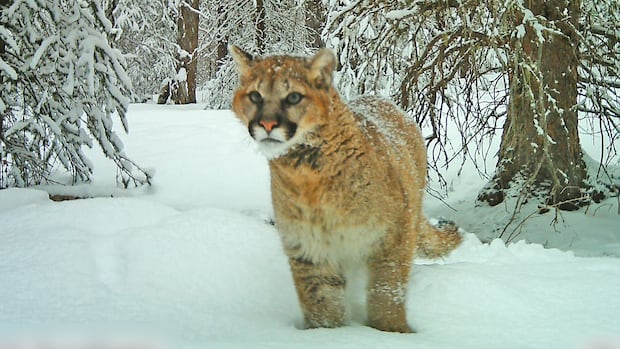

Patrick Cummins once witnessed a cougar traverse his backyard, ascend onto his deck, and walk across the roof of his house.
Residing close to Bergen, Alta., Cummins did not actually see the cougar. Instead, he only observed its paw prints in the snow.
In his 51 years of living on the property, Cummins has yet to encounter a cougar in person, although he has captured images of these elusive animals using trail cameras.
“We always suspected there were cougars around,” Cummins remarked. “I guess we were somewhat cautious, but to my knowledge, they haven’t posed any threat to anyone in this area.”
However, the presence of tracks can expose a typically unseen predator.
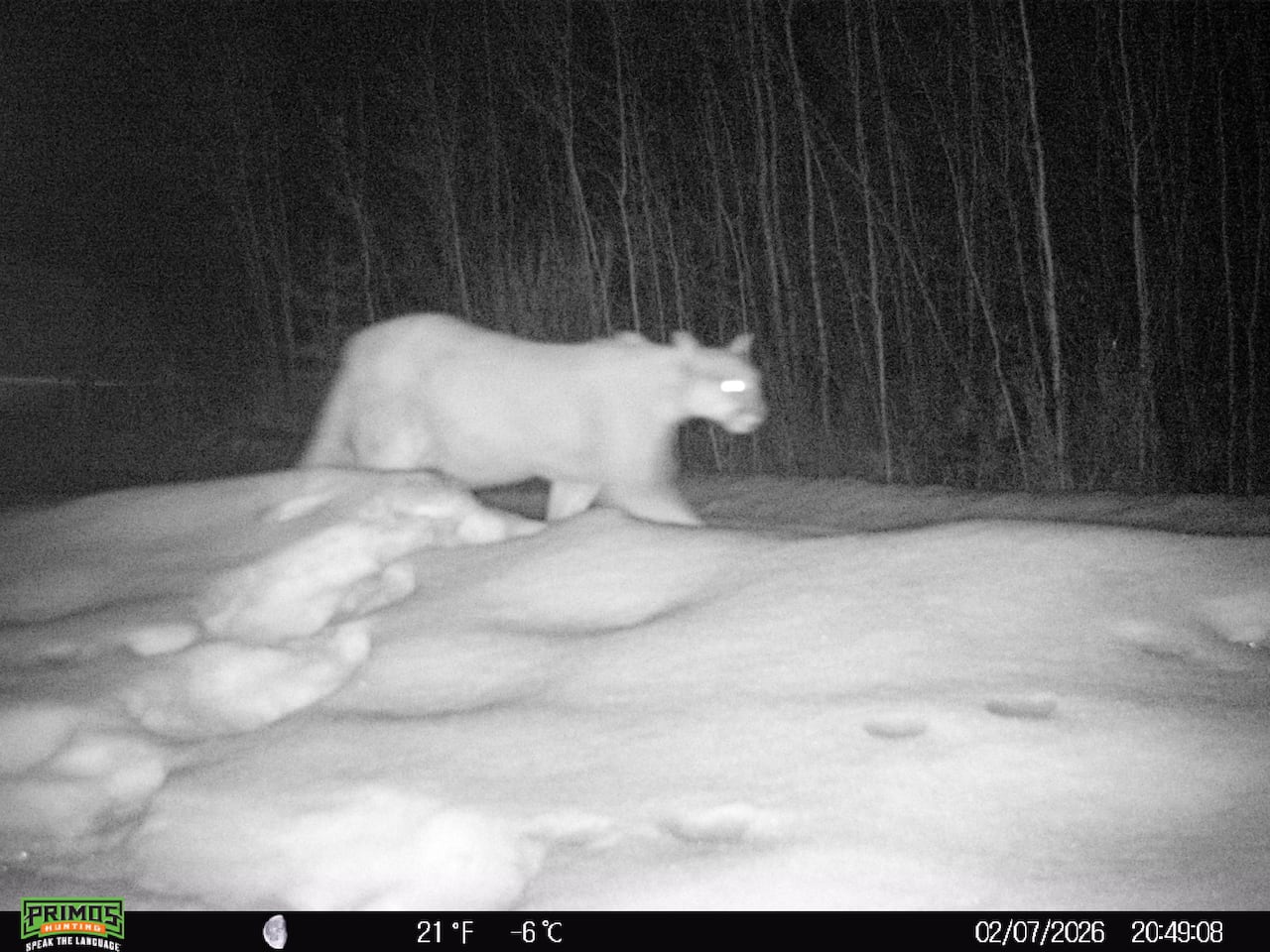
A cougar traverses Patrick Cummins’s property near Bergen, Alta., on February 7. Recent studies are investigating how human developments impact cougar survival in west-central Alberta. (Submitted by Patrick Cummins)
Recent research from west-central Alberta indicates that roads, housing, and other human-constructed pathways intersecting cougar territory may influence not only the animals’ movement but also their survival rates.
Over a span of five years, researchers monitored 80 GPS-collared cougars and discovered that their risk of mortality increased when they were closer to residences and secondary roads, as well as when they frequently traversed human-made clearings.
Out of 37 recorded fatalities, 29 were attributable to human actions.
“This primarily relates to easier access for hunters,” explained Carter Littlefair, the lead author of the study, published Wednesday in PLOS One.
Littlefair conducted this research while pursuing his graduate studies at the University of Alberta. He noted that secondary roads facilitate hunter access to cougar habitats, while clearings can indicate the movements of the animals.
“When a cougar crosses a road, it leaves tracks behind.”
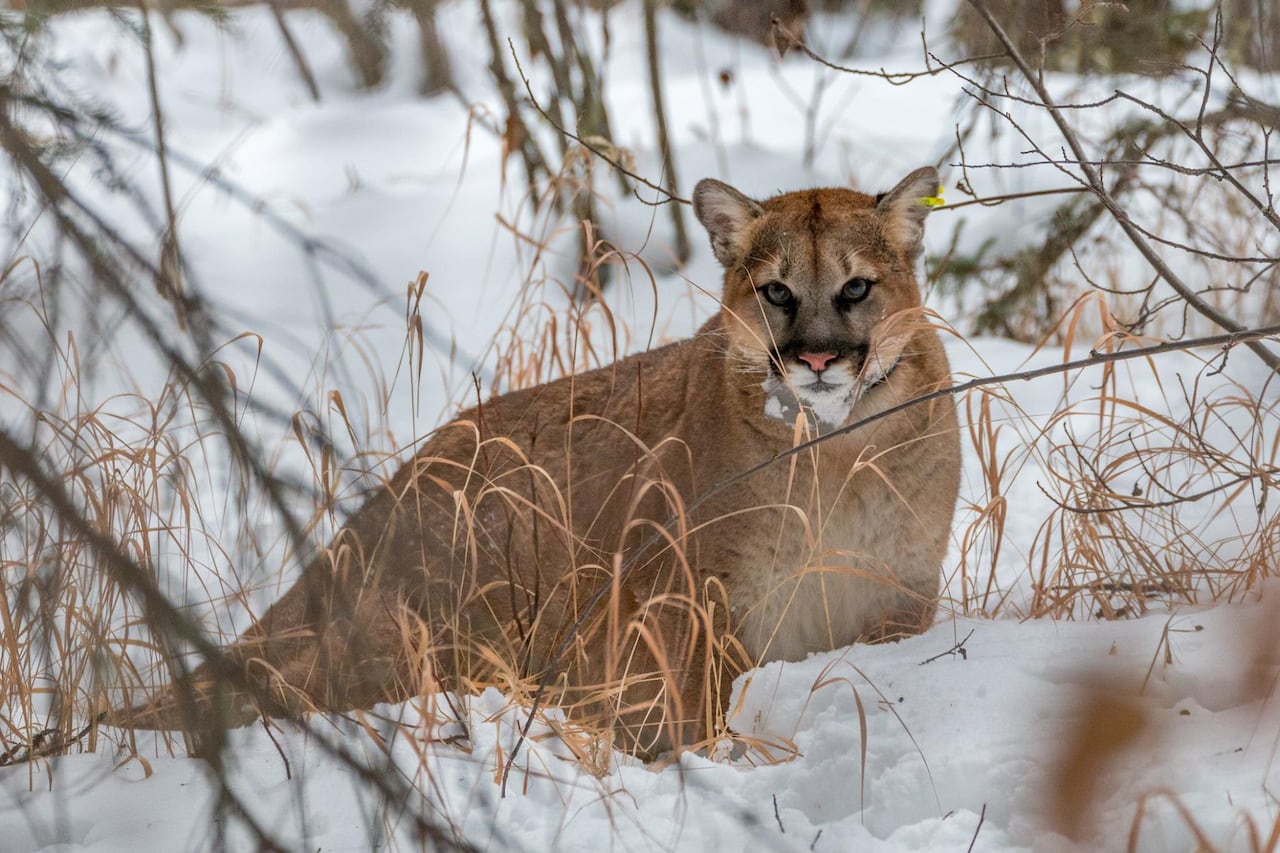
Cougars typically steer clear of paths frequented by humans, which is why the province aims to lessen trail density in crucial wildlife regions. (Submitted Delaney Frame/Alberta Environment and Parks)
Link Between Human Activity and Mortality Risk
The study tracked cougars from 2016 to 2021 across an area that included secondary roads and man-made clearings such as seismic lines, powerline corridors, and railways.
Hunting emerged as the leading cause of death, responsible for 16 of the 37 fatalities. Eight cougars lost their lives due to traps set for other animals, while five others perished in vehicle accidents or were removed due to being problematic animals or at the request of landowners.
The researchers also observed a significant seasonal variation in survival rates. The estimated survival rate was 96 percent from April to October, but dropped to 62 percent from November to March.
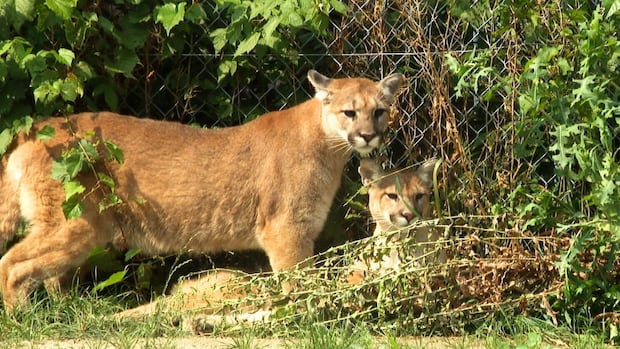
During the study, Alberta’s cougar hunting season commenced on December 1 each year and continued until the end of February or until quotas were met.
The findings indicated a correlation between cougar mortality risk and human-created features, though direct measurements of hunting activity were not conducted. Littlefair suggested that the increase in hunter access and the ability to spot cougars could help clarify this link.
Implications for the Cougar Population
Researchers approximated an annual survival rate of around 60 percent, which Littlefair noted aligns with other populations that are hunted. He also mentioned that hunting comprised a smaller portion of mortality compared to some earlier studies.
Alberta Forestry and Parks informed CBC News that the cougar mortality rates observed in the study area were comparable to those in other regions where hunting is allowed.
The department indicated that the study area encompassed about 15 percent of Alberta’s cougar management zones at the time and advised against extrapolating the results to the entire province. They reported observing increases in cougar populations and range expansions throughout Alberta.
The study did not assess population size or reproductive rates, leaving researchers unable to conclude whether the population is increasing, stable, or declining.
-
Even low levels of backcountry recreation linked to fewer wolverines, study finds
-
Sask. survivor of crash with moose shares warning about road dangers from wildlife
Littlefair remarked that while the research sheds light on cougar mortality, it does not provide evidence of an unsustainable death rate.
For Cummins, the extent of human involvement in these deaths was surprising.
“Yes, that does take me aback,” he admitted.
“There are more people in rural areas now compared to the past,” Cummins noted. “So perhaps that increase in human presence in the wilderness is a contributing factor.”