


Marine scientists in British Columbia are exploring a novel approach to whale monitoring inspired by a successful initiative in California. In San Francisco Bay, a collaboration between researchers, ferry operators, and the public is revolutionizing whale tracking using innovative technology.
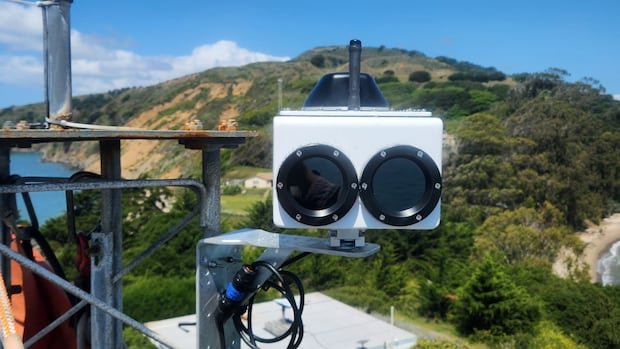
The introduction of WhaleSpotter cameras, discreetly housed in compact white boxes and equipped with thermal imaging capabilities, has significantly enhanced the monitoring of whale activities around the clock. These cameras, now operational on Angel Island and San Francisco Bay Ferry vessels, contribute valuable data to a public app in conjunction with human sightings.
Daniel Zitterbart, the lead scientist at WhaleSpotter, emphasizes the importance of increased surveillance on the water to safeguard whales from potential harm. While British Columbia also utilizes WhaleSpotter cameras, they are currently limited to land installations, reducing their range to approximately two nautical miles (3.7 kilometers).
Efforts to track marine mammals are crucial for understanding their migratory paths and mitigating vessel collisions, an escalating concern in British Columbia. Recent incidents, such as the tragic deaths of humpback whales and an endangered orca due to ship strikes, underscore the urgency for proactive measures.
In San Francisco Bay, the Whale Spotter cameras are seamlessly integrated with the Whale Safe app, facilitating real-time tracking of whale sightings by a diverse group of stakeholders. This collaborative endeavor, as highlighted by Douglas McCauley, director of the Benioff Ocean Science Laboratory, exemplifies the power of community-driven conservation initiatives.
While in British Columbia, access to WhaleSpotter camera data is restricted to approved commercial mariners via the Ocean Wise whale report alert system, the general public remains excluded. Thomas Hall from San Francisco Bay Ferry underscores the potential of ferry-mounted cameras to monitor whale behaviors systematically and adjust sailing routes accordingly.
Advocates like Zitterbart are urging British Columbia Ferries to adopt similar monitoring technologies across their routes, particularly in humpback whale hotspots. In response, British Columbia Ferries is considering deploying detection devices on their northern route following a fatal humpback whale collision.
Increased collaboration and data sharing among conservation groups are essential to protect whales globally from the escalating threats posed by vessel strikes. As ship traffic rises and climate change alters whale habitats, collective action is imperative to ensure the safety and conservation of these majestic marine creatures.
The successful implementation of the whale detection system in San Francisco serves as a valuable lesson for British Columbia, emphasizing the need for innovative solutions and collaborative efforts to safeguard marine wildlife.
[End of the rewritten article]