
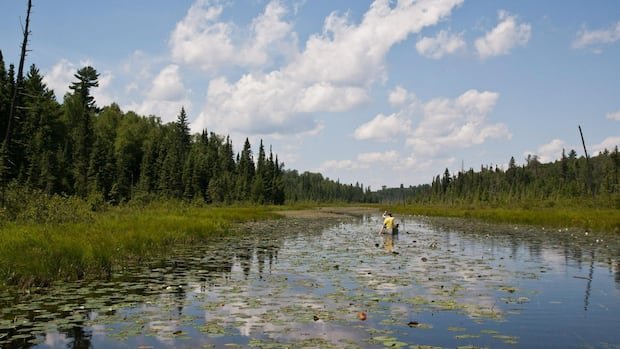

U.S. President Donald Trump has ended a federal prohibition on mining near the Boundary Waters Canoe Area Wilderness in Minnesota, allowing a South American company interested in the area’s valuable metals to start seeking permits. Environmentalists are worried that this decision could pave the way for eliminating other safeguards for public lands nationwide. Twin Metals Minnesota LLC, a subsidiary of Antofagasta Minerals based in Chile, has been exploring the possibility of extracting copper, nickel, and other precious metals in the Superior National Forest since 2019.
The concern is that potential pollution from mining in the area could harm the nearby canoe region, which is one of the few remaining untouched wild spaces in the country. Former President Joe Biden’s administration had imposed a 20-year ban on mining in the national forest in 2023, delaying Twin Metals’ plans. However, Trump’s administration aims to boost domestic energy and mineral production, with congressional Republicans presenting a resolution to lift the ban recently. They argue that this move will create job opportunities and revitalize the mining sector in Minnesota’s Iron Range. Trump signed the resolution on Monday.
In response to the decision, Ingrid Lyons, the executive director of Save the Boundary Waters, expressed disappointment, stating that the iconic wilderness area needs protection, but the voices advocating for its preservation were disregarded. Despite the setback, she emphasized the ongoing commitment to safeguarding the region.
A spokesperson for Twin Metals, Kathy Graul, mentioned that while the lifting of the ban presents an opportunity to strengthen mineral supply chains, the company still has to undergo a rigorous permitting process that could span several years. The mining site is located on a mix of state, federal, and private land, adding complexity to the regulatory process. One of the initial challenges for Twin Metals is to regain the right to mine after federal site leases were terminated by Biden’s Department of the Interior in early 2022.
Twin Metals has filed a federal lawsuit to affirm the validity of the leases, although the case was dismissed by a judge in 2023. The company is appealing this decision. Additionally, the company would need to secure a mining permit from the Minnesota Department of Natural Resources by demonstrating the ability to prevent water pollution, manage waste rock safely, and restore the land post-mining. State water and air permits would also be required.
U.S. Senator Amy Klobuchar, a Minnesota Democrat who opposed lifting the ban, could pose a significant obstacle for Twin Metals should she win the gubernatorial race in November. Environmental organizations and Indigenous groups may potentially challenge each permit in court, causing delays in Twin Metals’ operational plans. The possibility of objections from Canadian authorities regarding potential cross-border pollution that violates U.S. treaties also looms.
The Boundary Waters serves as a dividing line between northeastern Minnesota and northwestern Ontario, with the Quetico Provincial Park located on the Canadian side. This area is renowned for its unspoiled natural beauty, with strict regulations in place to preserve its pristine condition. The U.S. Forest Service issued approximately 776,000 visitor permits between 2020 and 2024 for the region.