
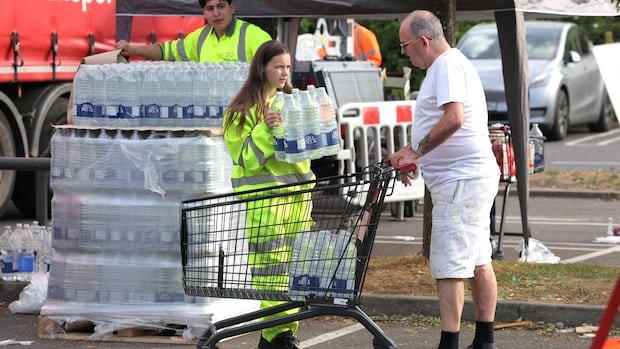

Thousands of homes in southeast England experienced water shortages or reduced pressure amid an unprecedented heatwave this week, highlighting the vulnerabilities in the outdated infrastructure of Britain. The situation impacted over 20,000 individuals at its peak, with approximately 8,000 residents in Whitstable facing water supply disruptions, leading to long queues for emergency water provisions on Friday.
The scorching heatwave that swept across Europe in recent days fueled a surge in water demand. Additionally, below-average rainfall in March and April placed strain on some reservoirs, as reported by the Environment Agency. Dissatisfaction has mounted due to the lack of investment by privatized water companies, resulting in frequent sewage overflows.
In Whitstable, numerous businesses were forced to shut down during a bustling period coinciding with a school holiday. Local cafe owner Mark Kidd expressed frustration, emphasizing the essential need for water in food preparation and contrasting the situation with regions in hotter climates that manage to sustain water services.
Residents, like George, directed blame towards the local supplier, South East Water, which is already under scrutiny by regulator Ofwat for previous network outages. George urged water companies not to attribute their inadequate investment to climate change or increased water consumption.
South East Water issued an apology for the shortages, attributing the situation to exceptionally high temperatures driving up water demand. Despite anticipating the hot weather, the company faced “low storage” levels. Pumping 628 million litres on Wednesday, approximately 100 million litres above the seasonal norm, reflected the heightened temperatures.
Records were shattered as Britain, akin to France, registered its hottest May day during the heatwave, with temperatures surpassing 34 degrees Celsius according to the national weather service. Experts warn that dry spells followed by intense heat episodes are becoming more common with rising global temperatures, posing challenges for water companies in maintaining supply-demand equilibrium.
Emma Hardy, the U.K.’s under-secretary for water and flooding, emphasized the necessity for water companies to brace for frequent extreme heat periods. The Climate Change Committee underscored the inevitability of increasingly scorching and arid summers in the country, estimating a yearly investment requirement of around 11 billion pounds ($20.5 billion) for adaptation.