

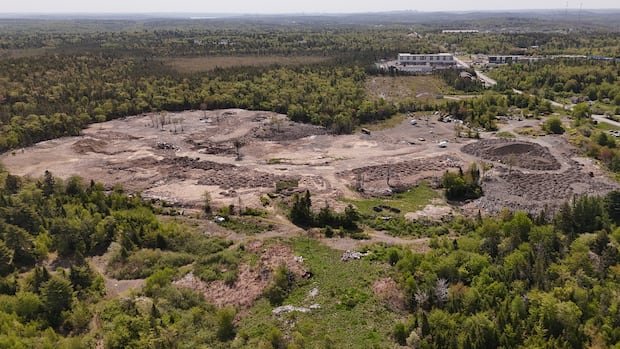

A 10-hectare desolate plot of land on the outskirts of Halifax, visible from above, is characterized by rocky mounds, scattered trees, and old pallets. This peculiar landscape is now the focal point of a unique legal dispute. Authorities in Nova Scotia are utilizing legislation typically reserved for drug traffickers and organized crime to pursue the forfeiture of equipment allegedly involved in an illegal landfill operation conducted last year at the Upper Hammonds Plains site.
This case marks a rare instance where Nova Scotia’s nearly two-decade-old Civil Forfeiture Act is being invoked following an investigation into environmental law violations, sparking controversy. The owner of a piece of equipment caught up in the legal battle, Arni Lively of Dennis Lively Construction, vehemently protests the seizure of his $300,000 topsoil sifting machine, the Powerscreen Warrior 800, earlier this year. Lively claims his excavation company was merely leasing land at the property and had no connection to the alleged illegal dumping, expressing frustration at being ensnared in the investigation unfairly.
In court filings related to a forfeiture application, it was revealed that drone footage from June 2025 allegedly captured trucks depositing construction debris and litter at the site, with Franklyn Whiley, the landowner, purportedly accepting cash and using an excavator to bury the waste. Whiley, who owns the excavator and backhoe facing forfeiture, has refrained from commenting further on legal advice.
The Justice Department has raised allegations under the Environment Act and waste regulations, although no charges have been formally laid, and a forfeiture hearing date remains pending. The Environment Department has not disclosed the drone footage or provided any statements to the media. Whiley, allowing CBC access to the property, has deferred detailed discussions until later in the legal proceedings. The area was observed to be a mix of soil, rock, and scattered debris, with a collection of vehicles along one edge.
The application of civil forfeiture laws, primarily used in cases involving drug trafficking proceeds and illicit activities, to an environmental issue like the alleged landfill is considered somewhat unusual by legal experts. Jeff Simser, a former civil forfeiture director in Ontario, explained that such laws were designed to address a range of non-criminal violations, including activities like illegal landfills, underscoring the broader scope of the legislation.
Lively, emphasizing the significance of clean topsoil production for his business, expressed substantial financial losses due to the equipment seizure. He believes that the application of civil forfeiture laws in this context is unwarranted and raises concerns about the lack of understanding of his equipment and its legitimate usage. The legal battle remains ongoing, signaling a potentially precedent-setting case in the realm of environmental law enforcement.
The Justice Department declined interview requests, citing ongoing legal proceedings. Notably, this case represents a rare instance of environmental law enforcement under civil forfeiture legislation in Nova Scotia.