

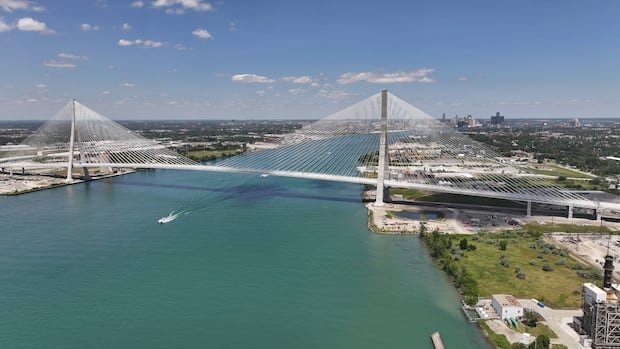

After a quarter-century of planning, a seven-year construction period, and several delays, the inaugural trucks are poised to traverse the Gordie Howe bridge on Monday. This bridge is a crucial link in the Windsor-Detroit corridor, facilitating the swift transport of goods worth billions of dollars, leading to significant time and cost savings.
Moshe Lander, an economics professor at Concordia University specializing in international trade, emphasized the immense potential of the bridge both financially and in shaping the future. The Gordie Howe bridge is anticipated to transform the transportation landscape in the region, with three lanes in each direction improving traffic flow substantially.
The new bridge is projected to accommodate 44.5% of the commercial traffic in the Windsor-Detroit corridor, as reported by the U.S. Department of Homeland Security. By connecting major American and Canadian highways directly, such as Interstate 75 and the 400-series highways in Ontario, the Gordie Howe bridge will streamline transportation routes.
Although individual time savings per trip may seem minor, cumulatively they are estimated to save truck drivers approximately 850,000 hours annually in waiting times. This efficiency is expected to translate into monthly savings ranging from $20,000 to $100,000 for trucking companies, depending on their fleet size.
Furthermore, lower tolls on the Gordie Howe bridge compared to the Ambassador Bridge will contribute to cost reductions. Additionally, decreased idle time in traffic will lead to savings on fuel and wages for trucking operations, enhancing overall efficiency and profitability.
With a third of U.S.-Canada trade passing through this corridor, the bridge is poised to deliver substantial economic benefits. The daily trade volume of $1 billion underscores the critical role the Windsor-Detroit crossing plays in North American commerce, especially in the automotive sector where parts traverse borders multiple times.
The efficient flow of goods facilitated by the Gordie Howe bridge will not only prevent production delays but also potentially curb inflation. The bridge signifies the enduring importance of the trading relationship between Canada and the U.S., despite political tensions and tariff threats.
While the benefits are significant, Canada will need to repay the $6.4 billion investment in the bridge. The ownership of the bridge by the governments of Canada and Michigan has sparked debates on revenue distribution, with recent agreements outlining toll revenue allocation for maintenance and economic development initiatives.
In conclusion, the Gordie Howe bridge represents a pivotal infrastructure project that promises to enhance trade efficiency, reduce costs, and strengthen economic ties between Canada and the U.S., underscoring the enduring importance of cross-border commerce.