

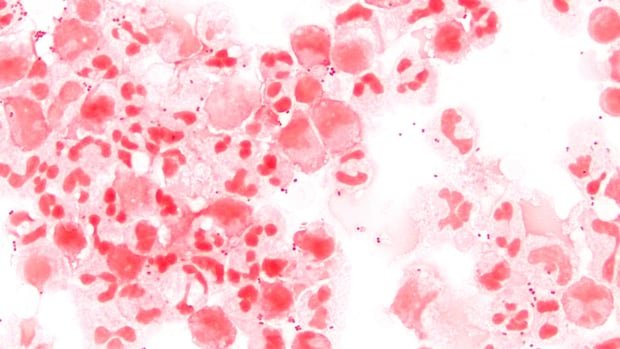

Annual instances of invasive meningococcal disease (IMD), a uncommon yet perilous bacterial infection, have reached the highest point witnessed in Canada in over a decade. This swiftly advancing affliction is notorious for triggering a range of severe complications, such as meningitis, a condition characterized by inflammation of the membranes surrounding the brain and spinal cord, in addition to bloodstream infection, sepsis, significant organ impairment, and potentially long-term disability or fatality. Infants and young adults exhibit some of the highest mortality rates, according to federal data.
Dr. Cristin Muecke, a regional medical officer of health at Nova Scotia Health, emphasized the profound impact of IMD on young individuals, underscoring the severity of the disease despite its rarity. While there was a substantial decline in annual case numbers following the introduction of meningococcal vaccines in the early 2000s, with a record low in 2021 during the COVID-19 pandemic restrictions, recent data from Canadian public health authorities indicates a consistent resurgence of IMD.
The Public Health Agency of Canada reported 48 cases of IMD in 2021, 74 in 2022, and close to 100 in 2023. Subsequent provincial data from CBC News revealed a significant increase, with over 130 cases in 2024 and nearly 160 in 2025, marking the highest figure since 2012 for the country. Notably, data from the territories was not included due to typically lower numbers stemming from smaller populations.
Dr. Allison McGeer, an infectious disease specialist, expressed expectations of a post-pandemic surge in IMD cases given the return of various diseases to typical levels in recent years. She highlighted the complexity of these bacterial infections, citing their unpredictable nature and the diverse bacterial subtypes responsible for varying levels of incidence across provinces, occasionally sparking unanticipated outbreaks.
IMD, with a 14% fatality rate in Canada, poses a significant risk to infants and young adults, with 15 to 20% of infected individuals suffering from lasting health consequences such as hearing loss, limb amputations, or neurological impairments. The disease spreads through Neisseria meningitidis, a common bacterium carried by approximately one in ten individuals. Among the six known subtypes, including meningococcal A, B, C, X, W, and Y, some are more prone to causing invasive infections.
In a case from April 2024, Jason Fryza and Sandy Hilmarsen recounted their daughter Leah’s battle with bacterial meningitis, starting with symptoms that escalated rapidly after a basic ear infection diagnosis. Rushed to the hospital, Leah was later diagnosed with life-threatening bacterial meningitis and required intensive treatment, including multiple MRIs and broad-spectrum antibiotics, ultimately leading to a full recovery.
Manitoba has witnessed elevated IMD cases in recent years, particularly impacted by an outbreak of meningococcal W affecting young individuals in Winnipeg and Indigenous communities in northern regions. In 2025, Manitoba reported four fatalities out of 23 cases, a figure approximately five times higher than usual, as per health officials.
While various provinces are not observing a significant uptick in IMD, several regions are experiencing a recent surge in infections and fatalities. Saskatchewan reported an increase from four cases in 2024 to 17 in 2025, with three cases this year. Ontario documented 39 cases and six deaths in 2024, with preliminary counts of 42 cases in 2025 and two cases so far in 2026. Quebec reported fewer than five deaths in 2024 out of 53 cases, along with six deaths and 47 cases in 2025 and an additional 10 cases in 2026.
Different provinces in Canada adopt diverse strategies to combat IMD, with tailored vaccination approaches based on regional variations in subtypes and infection rates. Dr. Brent Roussin, Manitoba’s chief provincial public health officer, highlighted the province’s shift in vaccination strategy to address the outbreak, enabling children to receive a vaccine covering four meningococcal bacterial subtypes at a younger age compared to previous protocols.
Vaccine uptake for meningococcal vaccines has declined nationwide, posing challenges for health authorities managing this disease. Dr. Joanne Langley, a pediatric infectious disease professor, attributes this drop to factors like reduced accessibility during the pandemic, vaccine hesitancy, and shortages of primary care providers in many areas. Despite these challenges, experts emphasize the importance of vaccination as the best defense against IMD, stressing the need for prompt recognition of warning signs and timely intervention in suspected cases of the infection.