

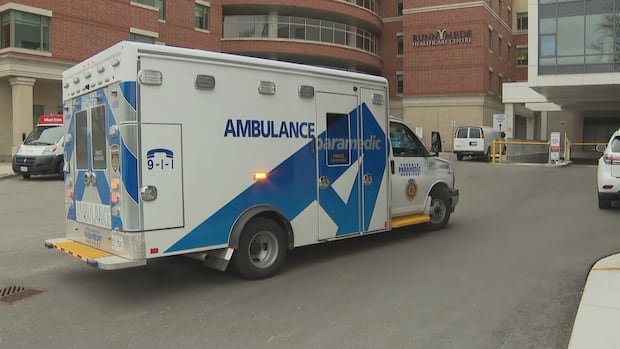

The Canadian federal government has allocated $15 million to support the establishment of two new treatment facilities in the Greater Toronto Area catering to first responders dealing with post-traumatic stress injuries. This funding aims to enhance the availability of specialized care for various frontline professionals such as police officers, firefighters, correctional officers, paramedics, and healthcare workers, as mentioned by Eleanor Olszewski, who serves as the minister of emergency management and community resilience.
Olszewski emphasized the importance of altering the approach to addressing these invisible injuries, highlighting the common obstacles faced by individuals seeking support for such conditions. She acknowledged the significant roles played by these professionals in assisting Canadians during times of crisis and underscored the substantial responsibilities they bear on a daily basis under immense pressure.
Pointing out the heightened risk of post-traumatic stress injuries, depression, anxiety, addiction, and other mental health issues faced by first responders and frontline healthcare workers due to their exposure to trauma, Olszewski mentioned that the funding is also intended to combat the stigma surrounding mental health challenges within these groups.
The two upcoming treatment facilities, set to be established in Toronto and Caledon, will be managed by the Runnymede Healthcare Centre, known for its specialized care services in the west end of Toronto. The Toronto site, named Station No. 3434, will operate as an outpatient clinic, while the Caledon Recovery Centre will function as a residential facility, offering a comprehensive range of services. Construction of these facilities is scheduled to commence in the coming year.
Connie Dejak, the president and CEO of the Runnymede Healthcare Centre, expressed the vision for these sites to form an integrated care system providing multiple pathways to healing for first responders. Dejak highlighted the real and cumulative nature of occupational stress injuries, emphasizing the long-term impact on individuals, their families, and the communities they serve.
Estimates by the Runnymede Healthcare Centre suggest that over 36,000 first responders in Ontario are currently affected by post-traumatic stress injuries, a number projected to increase to more than 46,000 by 2040. Ontario Health Minister Sylvia Jones lauded the federal funding as a significant step forward, following the province’s commitment of over $10 million to the project in 2025.
The Station No. 3434 hub in Toronto is envisioned as a central outpatient facility providing assessment, therapy sessions, and aftercare for various post-trauma conditions, depression, and substance use disorders. Additionally, it will offer recreational programs and amenities to support individuals in their recovery journey. On the other hand, the Caledon Recovery Centre will offer residential services with detoxification programs, intensive therapy, and personalized care plans, aiming to provide a supportive environment for recovery and long-term well-being.