

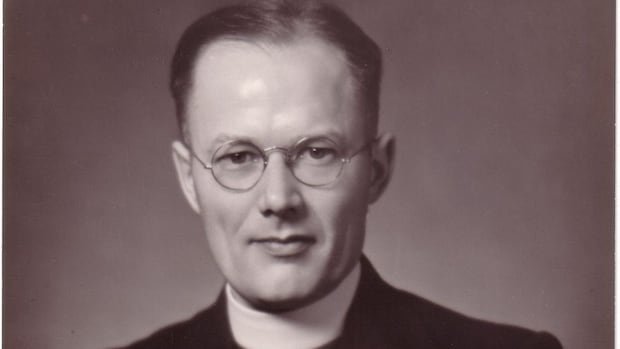

In a world filled with artificial intelligence, alternative facts, and contentious decisions, the quest for truth, reality, and goodness becomes increasingly crucial. Bernard Lonergan, a Canadian Jesuit philosopher who lived from 1904 to 1984, foresaw these challenges and dedicated his life’s work to unraveling the intricacies of human consciousness.
John Dadosky from Regis-St. Michael’s Faculty of Theology at the University of Toronto, a long-time scholar of Lonergan’s teachings, highlights Lonergan’s belief in humanity’s innate desire for truth and goodness. Lonergan’s seminal work, “Insight,” published in 1957, delves into this pursuit of knowledge and virtue.
Regarded as one of the most profound Catholic intellectuals in history, Lonergan’s extensive Collected Works spanning 25 volumes continue to influence philosophical discourse. According to Dadosky, Lonergan’s philosophy is poised to shape future generations, emphasizing its relevance to individuals.
In light of Lonergan’s teachings, IDEAS presents five fundamental principles for personal guidance:
1. **Practice attentiveness:** Begin by closely observing and reflecting on personal experiences and consciousness. This introspection lays the foundation for deeper insights, requiring occasional revisits to validate or reevaluate gathered data.
2. **Exercise intelligence:** Foster a spirit of curiosity and wonder, allowing questions to arise naturally. Avoid stifling inquiries, as questioning is essential for acquiring knowledge and uncovering truths.
3. **Embrace reasonableness:** Engage in deeper questioning to prepare for informed judgments. Rather than asking “what is it?” focus on questions like “is it so?” to scrutinize experiential data effectively.
4. **Demonstrate responsibility:** Apply acquired knowledge judiciously. Acting responsibly involves utilizing insights gained through attentive, intelligent, and reasonable processes to promote the greater good.
5. **Cultivate love:** Extend care and compassion to loved ones and the broader community, transcending personal boundaries. Lonergan’s concept of “being in love in an unrestricted manner” underscores the appreciation of transcendent values, which may manifest differently across various spiritual traditions.
Lonergan’s vision of a broader love rooted in transcendent values, exemplified in his depiction of the Holy Trinity, underscores the transformative power of love in shaping one’s desires, decisions, and actions. This profound influence continues to resonate through Lonergan’s enduring legacy in philosophical thought.
The accompanying icon by William Hart McNichols, commissioned in 2002 for the Lonergan Research Institute in Toronto, symbolizes Lonergan’s reverence for the Holy Trinity. The imagery portrays the Spirit extending a hand towards Lonergan, who humbly acknowledges the transcendent. The incorporation of Canadian elements, such as maple leaves and inspiration from Group of Seven artist Lawren Harris, adds a unique cultural touch to the icon.
For further insights, you can listen to the IDEAS podcast episode on this topic.