

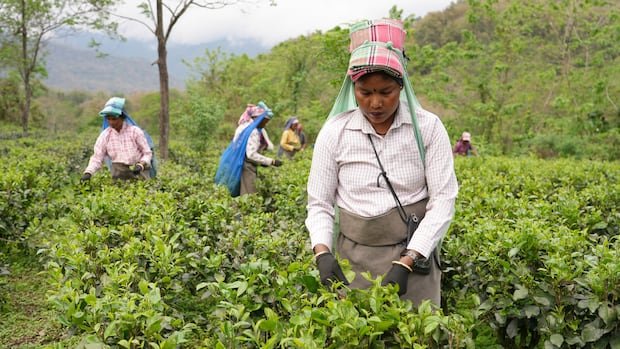

On a foggy day in March in Darjeeling, Satish Mitruka strolls among the withered leaves of his tea plantation, discussing how shifting weather patterns impact his business. Mitruka, a third-generation tea grower in West Bengal, India, describes Darjeeling as an industry in decline, echoing sentiments expressed by his overseas clients.
The period from late February to early March marks the start of the crucial first flush harvest in Darjeeling, known as the “champagne of teas.” However, this year’s harvest has faced challenges due to prolonged dry spells followed by heavy rainfall in March, jeopardizing the renowned aroma and flavor that fetch premium prices of up to $2,200 per kilogram.
Mitruka, speaking at Nurbong Tea Garden, his organic estate, highlights the significant impact of erratic climate changes on tea cultivation. He emphasizes the critical need for timely and adequate rainfall for the rain-fed tea crop to thrive.
The Himalayan region, where Darjeeling is located, is experiencing rapid temperature fluctuations and unpredictable rainfall patterns, posing a grave threat to tea production. As per research published in Nature Reviews Earth and Environment, the Himalayas are warming at a rate nearly 50% faster than the global average, exacerbating the challenges faced by tea growers like Mitruka.
The adverse effects of climate change are evident in the Himalayan tea gardens, with irregular rainfall patterns disrupting the traditional harvest cycles. The lack of winter rains jeopardizes the first flush harvest, impacting the quality and marketability of Darjeeling tea.
The changing climate, coupled with aging tea bushes and the menace of counterfeit teas flooding the market, has created a bleak outlook for Darjeeling’s tea industry. The diminishing quality and flavor of the tea, compounded by reduced profits, are discouraging the younger generation from continuing their family’s legacy in tea cultivation.
Mitruka’s concerns about the future of Darjeeling tea production reflect the broader challenges faced by the industry amid climatic uncertainties. As the industry grapples with shrinking margins and environmental pressures, the sustainability of Darjeeling tea as a premium product hangs in the balance.