

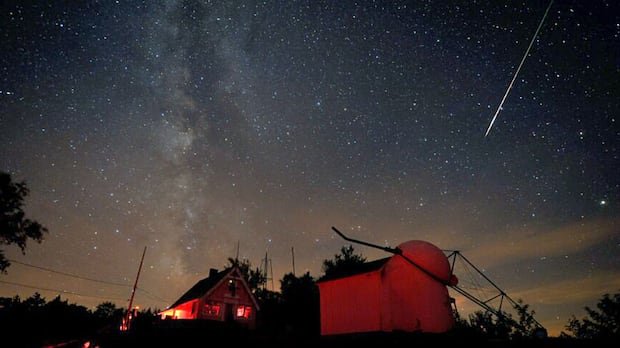

In August, stargazers can look forward to the spectacular Perseid meteor shower, one of the most anticipated celestial events of the year. Coinciding with this year’s Perseids’ peak is a partial solar eclipse, adding to the cosmic display.
The Perseid meteor shower is renowned for its abundance of bright meteors and favorable viewing conditions, making it a favorite among skywatchers. The peak viewing night is expected on August 12-13, aligning with a new moon phase, enhancing visibility by eliminating interfering moonlight.
Peter Brown, an expert in Meteor Astronomy at Western University, anticipates a high presence of Earth-grazers during this year’s Perseids. Earth-grazers are meteors that enter the atmosphere and then return to space, known for their brightness and speed, providing a captivating sight.
The meteor shower is projected to peak around midnight Eastern Daylight Time, potentially offering up to 120 meteors per hour under ideal dark-sky conditions. While not all meteors may be visible, the increased rate enhances the chances of spotting a dozen or more bright meteors early in the evening.
The Perseids’ radiant point lies in the Perseus constellation, but meteors can streak across the entire sky, making them visible to observers regardless of their location. Additionally, other meteor showers like the southern delta Aquariids, alpha Capricornids, and kappa Cygnids are active, contributing to the celestial spectacle.
In addition to the Perseid meteor shower, a partial solar eclipse is set to occur on August 12, visible in select regions including Greenland, Iceland, Spain, and a small part of Portugal. While Canadians won’t witness a total eclipse, the moon will create a partial eclipse, offering a unique astronomical event for viewers in different locations.
To observe the partial solar eclipse safely, viewers should use approved solar eclipse glasses to protect their eyes from the sun’s intense rays. Astronomers emphasize the educational value of solar eclipses, showcasing the intricate dance of celestial bodies in our solar system.
The upcoming cosmic events of the Perseid meteor shower and partial solar eclipse present an exciting opportunity for sky enthusiasts to witness nature’s celestial wonders in the night sky.