

Severe wildfire seasons in Newfoundland and Labrador are raising concerns for public safety and impacting geoscience activities crucial for the mining sector in rural and remote areas. The wildfires are causing disruptions by rendering work areas inaccessible and diverting aircraft typically used for transporting scientists to assist in firefighting efforts. Despite these challenges, the scientific program directors are managing the situation effectively.
The Government of Newfoundland and Labrador spent $321,800 less than budgeted on transportation for geophysical survey work for the Geological Survey of Newfoundland and Labrador last year. Energy and Mines Minister Lloyd Parrott attributed this difference to reduced helicopter usage due to unavailability caused by wildfires.
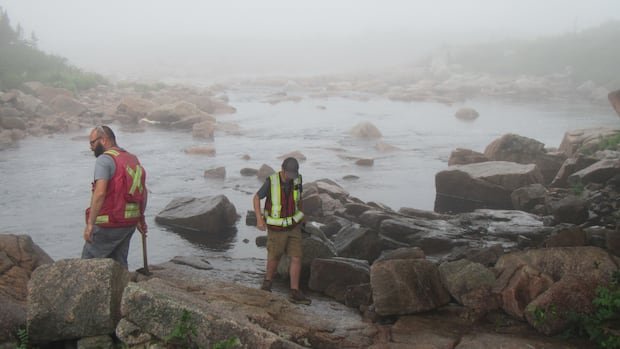
Geological survey scientists rely on helicopters, especially in Labrador, for accessing remote areas where drones are insufficient. Disruptions in helicopter travel can occur due to adverse weather conditions and wildfire suppression efforts, as confirmed by Minister Parrott.
Recent projects, including data collection in southeastern Labrador and a survey in the White Bay area, have been jointly funded with the federal government. The Geological Survey of Newfoundland and Labrador is currently undertaking 10 active field projects, with a focus on six areas in Newfoundland and four in Labrador, along with two planned airborne surveys using fixed-wing aircraft.
The province is experiencing record-high levels of private spending on exploration work, with a forecast of $283.3 million for the current year, indicating a significant increase from the previous year. Industry stakeholders emphasize the importance of public geoscience data in driving investment, de-risking projects, and accelerating potential discoveries.
Mining Industry N.L. executive director Amanda McCallum highlighted the sector’s resilience in managing through wildfire disruptions, noting that projects are being adjusted rather than canceled entirely. Mining remains a key contributor to the province’s GDP, directly employing around 8,920 people as of 2025.
While Newfoundland and Labrador currently face low wildfire risk levels, there are still active fires in parts of central and northern Labrador. The number of fires this year is lower compared to the previous year, but the total area burned is larger.