
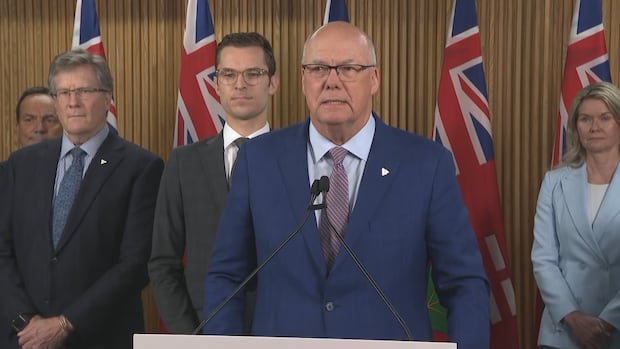

A significant overhaul of several regional governments was revealed by the provincial government today. Ontario Municipal Affairs and Housing Minister Rob Flack disclosed plans to reduce the number of regional council seats in Niagara from 32 to just 13, along with a regional chair. Similarly, in Simcoe County, the province intends to decrease the number of regional seats from 32 members to only 17, comprising 16 mayors and a regional chair.
Under the new Better Regional Governance Act, 2026, the province will be empowered to appoint regional chairs in Durham, Halton, Muskoka, Peel, Waterloo, and York, as well as the warden of Simcoe County. Additionally, if the legislation is approved, regional chairs will be granted “strong chair” powers akin to those of strong mayors in certain cities.
The announcement was made by Flack at Queen’s Park on Thursday. The changes aim to revamp the functioning of regional governments in some of Ontario’s rapidly growing regions. According to the province, these modifications are intended to reduce costs for municipal taxpayers and enhance alignment between regional decision-making and shared provincial-regional priorities.
During the press conference, Flack emphasized that the reduction in regional council sizes in Niagara and Simcoe is not primarily about cost savings but rather about fostering more agile governments capable of expediting processes such as approving new housing and critical infrastructure projects. He stressed that fewer politicians would enhance efficiency and decision-making, ultimately leading to more effective governance.
Niagara West Conservative MPP Sam Oosterhoof echoed these sentiments, noting feedback from constituents and businesses highlighting the cumbersome nature of the current local government model in Niagara. Oosterhoof emphasized the need for streamlining regional council to cut through red tape and facilitate a more nimble approach to focusing on essential infrastructure development.
While the proposed changes garnered swift reactions from some elected officials in Niagara, with St. Catharines city councillor Greg Miller criticizing the move as “anti-democratic,” others like Niagara Falls regional councillor Barb Greenwood welcomed the long-overdue reformation of regional government structures.
The revelation by Flack represents a significant shift in local governance in Niagara, the first of its kind in over 50 years. Despite previous discussions on potential amalgamation and governance restructuring, Flack’s announcement notably steered clear of major alterations to the region’s local town and city governments.
Premier Doug Ford has also voiced concerns about the excessive number of local elected officials in Niagara and emphasized the need for a more efficient government structure to safeguard taxpayers’ money. The resignation of former regional chair Bob Gale earlier this year further catalyzed discussions on downsizing local councils and enhancing governance efficiency.
The recent developments in Niagara and Simcoe County underscore an ongoing trend towards governance reform and restructuring in Ontario’s rapidly evolving regional landscapes.