

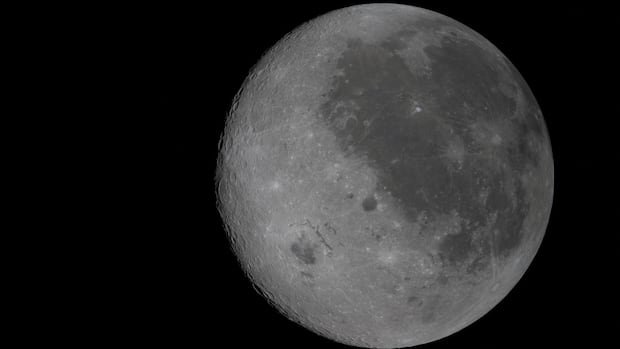

Artemis II’s Orion spacecraft set a new record for the farthest distance traveled by humans from Earth at 1:57 p.m. ET. Mission control briefly lost contact with the crew for about 40 minutes around 6:44 p.m. ET as the spacecraft passed behind the moon. By 7 p.m. ET, the crew had their closest encounter with the moon, offering them a unique view of the moon’s far side with the naked eye. At 8:32 p.m. ET, the spacecraft entered an eclipse, experiencing an hour of the sun behind the moon. The lunar flyby observation period concluded around 9:35 p.m. ET, with the crew preparing to transfer images to NASA’s team on the ground as they head back home.
The crew of Artemis II expressed awe at the sights they witnessed during a total solar eclipse as they completed their historic journey around the moon. Pilot Victor Glover struggled to find words to describe the experience, emphasizing how incredible it was. Commander Reid Wiseman described the sights as “absolutely spectacular” and “surreal,” expressing the need for new adjectives to capture the view.
During their journey, the crew reported witnessing meteors hitting the moon, observing details on the moon’s surface, and even spotting Mars, Venus, and Saturn in the distance. The record-breaking mission surpassed the previous distance record set by Apollo 13 in 1970, with the spacecraft now aiming towards Earth for a planned landing on Friday.
After regaining contact following the communication blackout, mission specialist Christina Koch expressed joy at reconnecting with Earth. Koch highlighted the significance of space exploration, including plans to return to the moon for further research and infrastructure development. As the crew surpassed the distance record, they proposed naming two lunar craters after their spacecraft, Integrity, and in honor of Wiseman’s late wife, Carroll.
The crew, consisting of Wiseman, Hansen, Koch, and Glover, are on their way back to Earth for a scheduled splashdown near San Diego. The mission, marked by significant milestones, included close observations of the moon’s geological features and historic lunar sites. The crew’s observations and data analysis during the flyby will provide valuable insights for future moon exploration efforts.
As they prepare to depart the lunar sphere of influence, the Artemis II astronauts follow a trajectory similar to Apollo 13’s free-return lunar path for a safe return to Earth. The crew’s journey, filled with emotional moments and groundbreaking discoveries, marks a significant step in human space exploration.
The crew’s experiences and achievements during the Artemis II mission demonstrate the remarkable progress and dedication in advancing space exploration for future generations.