


Two Indigenous leaders are urging Prime Minister Mark Carney to issue an apology for his comment suggesting he could “outlast” a First Nations woman protesting against mercury poisoning in her community. Chrissy Isaacs, a Grassy Narrows resident affected by mercury poisoning, visited Toronto to seek compensation from the provincial government due to mercury contamination caused by the Dryden Paper Mill in the 1960s and 1970s. This incident is considered one of Canada’s worst environmental catastrophes, with ongoing repercussions for the community.
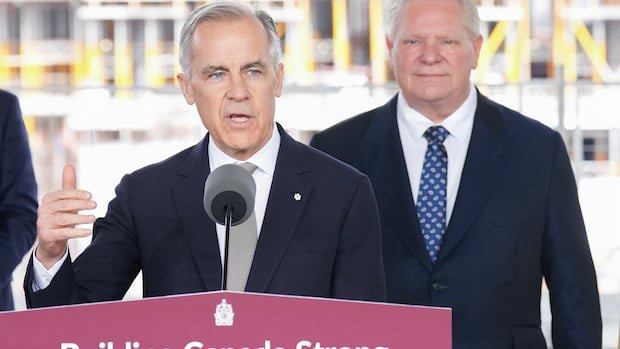
During a news conference held by Carney and Ontario Premier Doug Ford, Isaacs and other protesters voiced concerns about the mercury contamination in the background. Carney, along with Ford and Toronto Mayor Olivia Chow, chuckled briefly and remarked, “I can outlast her,” prompting criticism from Grassy Narrows First Nation Chief Sherry Ackabee for making light of the situation.
Chief Roland Fisher of Wabaseemoong Independent Nations emphasized the importance of not disregarding the community’s concerns and urged Carney to engage with them. In response, the Prime Minister’s Office stated that Carney was unaware of the demonstrators’ message and that his staff interacted with them to understand their grievances.
Acknowledging the critical situation, PMO spokesperson Audrey Champoux mentioned ongoing efforts to address various projects benefiting Grassy Narrows, such as a new health center, housing initiatives, and a mercury care facility. However, Ackabee expressed disappointment in not hearing from the minister and rejected the notion that Carney was unaware of the protest’s nature.
A study by Western University revealed that mercury emissions from the mill continue to pose threats to the community by producing methylmercury. The report highlighted elevated levels of methylmercury in the Wabigoon River’s fish, emphasizing the persisting impact of the mill’s discharge on Grassy Narrows’ population.
Mercury poisoning, which affects approximately 90% of the community, poses severe health risks, particularly neurotoxicity, and can lead to premature deaths. The harmful effects extend across generations, with children and infants being particularly vulnerable. Community member Julia da Silva expressed dismay over the government’s response and highlighted the urgent need for assistance in addressing the ongoing health crisis in Grassy Narrows.
The NDP MP Leah Gazan condemned Carney’s behavior, emphasizing the importance of respecting Indigenous communities’ voices and addressing environmental concerns. Gazan stressed the need for justice, clean water, and government accountability in supporting Grassy Narrows. The incident with Carney echoes a similar situation involving former Prime Minister Justin Trudeau and his response to a protester from Grassy Narrows.
The community’s struggle with mercury poisoning underscores the urgent need for action and support from government authorities to mitigate the long-term impacts on Grassy Narrows.