

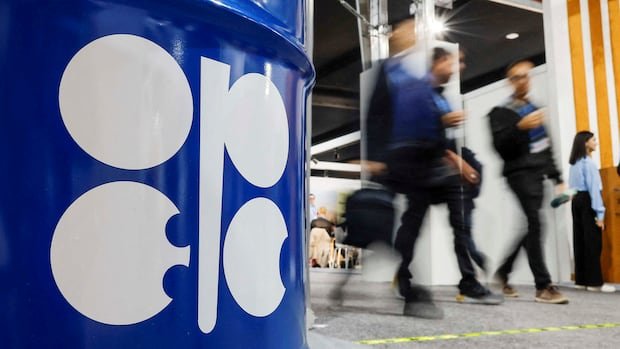

The United Arab Emirates has announced its decision to exit both the Organization of the Petroleum Exporting Countries (OPEC) and OPEC+ effective Friday, citing an unprecedented energy crisis resulting from the Iran conflict that has exposed disagreements within Gulf nations.
UAE has been a longstanding member of OPEC since 1967 through its emirate of Abu Dhabi and later as an independent country in 1971. OPEC+ was established in 2016 as an alliance with other oil-producing nations.
While OPEC historically controlled around 40% of global oil production, its influence has diminished in recent times due to increased oil production by the United States.
The departure of the UAE, one of OPEC’s major producers, weakens OPEC’s authority over global oil distribution and exacerbates tensions with neighboring Saudi Arabia, the de facto leader of OPEC. This move could potentially allow the UAE to boost its oil output once exports through the Gulf resume, as it will no longer be bound by OPEC production limits.
The UAE communicated its decision through the state-run WAM news agency, emphasizing its long-term strategic vision, economic goals, and commitment to playing a responsible and forward-looking role in global energy markets. Energy Minister Suhail Mohamed al-Mazrouei stated that the decision was made after a thorough review of the country’s energy strategies.
The UAE’s strained relations with Saudi Arabia, exacerbated by political and economic disputes in the Middle East, have contributed to this decision. The ongoing Iran conflict has also disrupted oil shipments through the Strait of Hormuz, a critical passage for global oil and gas trade.
Despite concerns about market impact, the UAE’s exit from OPEC has been viewed as a victory for U.S. President Donald Trump, who has criticized the organization for manipulating oil prices. The UAE’s departure follows its dissatisfaction with OPEC production quotas and the dwindling global spare oil capacity.
Analysts highlight the UAE’s significance as one of the few OPEC members with surplus oil production capacity, posing questions about Saudi Arabia’s role as the market’s primary stabilizer. The move is seen as emblematic of shifting geopolitical dynamics and a move towards self-interest in international relations.
While the immediate market impact is expected to be limited due to ongoing supply constraints from the Iran conflict, the long-term implications could lead to greater volatility in oil markets. This shift underscores a changing international order where traditional alliances are less influential, signaling a more competitive global landscape.