

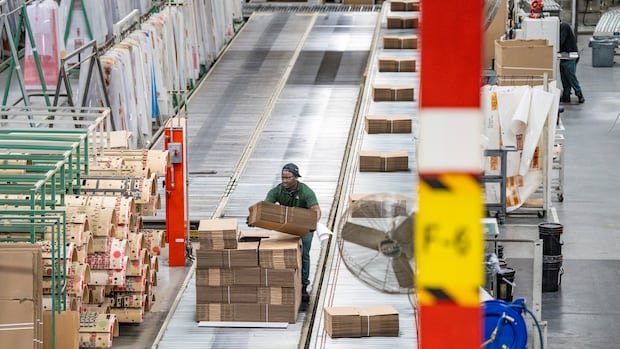

Statistics Canada reported that the Canadian economy expanded for the fourth consecutive month in February, although growth appeared to slow towards the end of the first quarter. The real gross domestic product (GDP) increased by 0.2% in February, driven by a robust 1.8% growth in the manufacturing sector, marking its strongest growth rate in over three years.
Within the manufacturing sector, the machinery subsector led the growth, followed by gains in transportation equipment manufacturing. Several auto assembly plants in Ontario resumed operations in February after a period of shutdown for upgrades and maintenance, contributing to the sector’s expansion.
Despite the positive growth, manufacturing activity in February was down by 3.1% compared to the previous year due to the impact of tariffs and trade tensions with the United States. The wholesale trade and transportation industries also played a significant role in boosting the economy during the month, while a decline in public sector activity and a slowdown in arts, entertainment, and recreation sectors restrained overall growth.
Sports events, particularly spectator sports, experienced a downturn in February as the NHL took a two-week break for the Olympics in Italy. The gains in February aligned with early estimates from Statistics Canada, marking the fourth consecutive month of economic expansion following a contraction in October that slightly dampened the fourth quarter of 2025.
Preliminary estimates for March indicated that the real GDP remained relatively stable, setting the first quarter on track for an annualized growth rate of 1.7%. While there were continued improvements in wholesale trade and transportation, declines in retail trade and mining, quarrying, and oil and gas extraction sectors offset some of the gains. Factors such as seasonal maintenance in the energy sector and disruptions in oil supply due to a refinery explosion in Texas likely contributed to the slowdown in these industries.
The Bank of Canada’s monetary policy report projected a 1.5% annualized growth rate for the first quarter, emphasizing uncertainties in future economic decisions. Updated GDP figures for March and the first quarter will be released by Statistics Canada at the end of May for further analysis.