

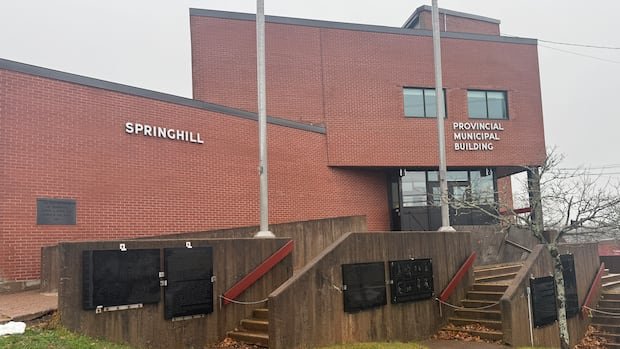

The Municipality of Cumberland is seeking to generate interest in utilizing geothermal energy extracted from Springhill’s disused mines following the conclusion of a provincially financed research initiative. A geothermal technical coordinator was engaged on a one-year contract in April 2023, with funding now prolonged until April 2026 as confirmed by the Department of Energy.
The coordinator conducted an examination into the geothermal energy potential within Springhill, Nova Scotia. The town’s abandoned coal mines have been submerged with naturally heated water from the Earth’s core. This geothermal energy source has been applied for heating and cooling purposes at various locations, including the community center, part of the Nova Scotia Community College campus, a fire hall, and local businesses.
Although the funding extension was not granted, the municipality continues to explore options for commercially viable uses of this resource, such as potentially establishing a greenhouse. A recent report presented to the Cumberland council highlighted opportunities for retrofitting buildings and developing a commercial geothermal greenhouse in Springhill. The study revealed that a geothermally heated 1,100-square-meter greenhouse could achieve a 67% energy savings, amounting to approximately $51,000 annually compared to electric boilers.
The municipality does not intend to take ownership of the greenhouse; instead, efforts are underway to attract business interest in the project. Tory Rushton, the MLA for Cumberland South and former natural resources minister, emphasized that while the coordinator position was not intended as a permanent role, it provided valuable insights that could be utilized by potential proponents considering various applications, with a greenhouse being just one possibility.
Rushton, who serves on a committee exploring ways to leverage the region’s geothermal resources, highlighted the importance of geothermal energy in discussions around renewable resources. The government in Houston is actively promoting resource development, including onshore natural gas and offshore wind energy, to enhance the province’s financial situation, which has faced a record deficit of $1.2 billion.
During an open house on fracking in Amherst, some opponents of fracking expressed support for geothermal energy. Jennifer Houghtaling, a Pugwash-area resident and Cumberland councillor involved in the geothermal committee, regretted the shift away from renewable energy towards gas. She emphasized the substantial research conducted before the funding cut and advocated for a renewed focus on renewable energy solutions.
The push for geothermal energy aligns with the provincial government’s renewable energy agenda, with geothermal being a significant component of discussions around sustainable energy sources. The commitment to exploring and leveraging geothermal potential in Springhill reflects a broader effort to advance renewable energy in the region.