

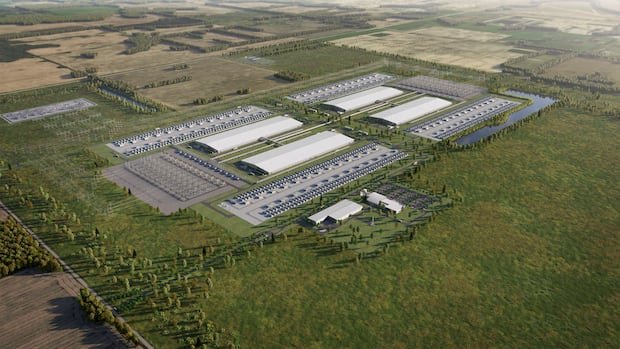

New York has taken a significant step by becoming the first state in the U.S. to halt the expansion of hyperscale data centers due to concerns over energy consumption and environmental impact. Governor Kathy Hochul, a Democrat, stated that it is her duty to lead by example. Through an executive order, New York will not issue new permits for large data centers for the next year.
This decision has thrust New York into a larger conversation about regulating the massive data centers that power artificial intelligence. The debate has also resonated in Canada, where communities are grappling with the implications of expanding data center infrastructure and its strain on local power grids and water resources.
While Hamilton, Ont., was considering a similar moratorium, the city council ultimately voted against it. Anne Pasek, an associate professor at Trent University specializing in data centers, raised concerns about the lack of adequate public consultation in approving these facilities.
Hyperscale data centers, which house computing infrastructure like servers and storage drives, have come under scrutiny for their significant energy consumption. These facilities, crucial for cloud computing and AI development, account for a substantial portion of global energy usage. The rapid growth of AI technology has further heightened worries about the environmental impact of these centers.
In addition to energy concerns, data centers are known for their high water consumption. They use water for cooling servers, posing challenges in areas with limited freshwater resources. Despite water-efficient cooling methods, the sheer volume of water used by global data centers, including for AI workloads, raises sustainability concerns.
The concentration of data centers in specific regions can lead to local challenges such as noise pollution and air pollution, impacting nearby communities. The demand for resources, particularly during peak usage periods, can strain local power grids. The industry’s expansion has prompted governments to consider the implications of hosting data centers, balancing economic benefits with environmental and social impacts.
While the U.S. leads in data center development, Canada is emerging as an attractive destination due to its affordable electricity prices. Meta’s announcement of a new data center near Edmonton signals further growth in Canada’s data center industry. With several hyperscale data centers planned or under construction, concerns persist about their environmental footprint.
Despite New York’s moratorium, other Canadian provinces have not committed to similar measures. Each province evaluates data center projects based on their individual merits, considering factors such as job creation, environmental impact, and economic benefits. The ongoing debate underscores the need for responsible and sustainable development in the data center industry.