

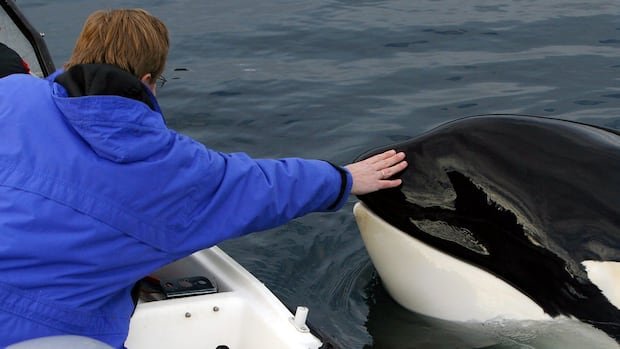

Prepare for a new version of the beloved classic: Willy is set to return to the big screen.
The iconic movie Free Willy is set for a reboot, as confirmed in a recent announcement. Warner Bros. and AGBO, the production company led by the Russo brothers, are collaborating on this project. Many specifics, such as casting decisions for the main whale character, are yet to be revealed.
Originally released in 1993, Free Willy tells the story of a young orphan who forms a bond with a captive orca at a marine park and aids in its escape. This heartwarming tale has left a lasting impression on audiences over the years.
The film, featuring the real orca Keiko, shed light on the issues surrounding animal captivity, according to Camille Labchuk, the executive director of Animal Justice in Canada.
The Legacy of Keiko
Labchuck emphasizes that the movie inspired ’90s children to advocate for animal welfare.
She noted how the film raised awareness about the harsh realities of captivity for creatures like orcas, belugas, and dolphins confined in places like SeaWorld and Marineland for extended periods.
The narrative of the original film is closely intertwined with the real-life saga of its star, Keiko.
Following the movie’s success, a significant public campaign was launched to relocate Keiko from his tank in Mexico. He became the first captive whale to undergo a sanctuary program, leading to his eventual release into the wild in a netted-off Icelandic cove. Keiko later swam to Norway but tragically succumbed to pneumonia in December 2003, remaining the only captive orca successfully reintegrated into the ocean.
However, Keiko’s story ended on a somber note, as he struggled to fully adapt to life in the wild after being captured at a young age. This reality reshaped public perceptions of captivity and raises doubts about the feasibility of using a live whale in the upcoming film.
A Real Whale in the Reboot?
VFX specialist Mark Hammond, a supervisor at the Toronto-based VFX studio Mr. X, believes it is highly improbable to feature a live whale in the movie due to evolving regulations and advancements in technology since the original film’s release.
In Canada, the ban on orca captivity in Ontario since 2015, coupled with stricter laws across the country, indicates a shift towards ethical treatment of marine mammals. Similar regulations have been implemented in the United States, notably in California, following public outcry sparked by the documentary Blackfish in 2013.
Hammond suggests that utilizing CGI for the character of Willy could revolutionize the filmmaking process by offering more creative control and flexibility compared to working with a live animal. He highlights the potential for digital effects to convey a more authentic and poignant narrative, especially in depicting the challenges faced by captive marine animals.
Despite the mixed reactions from die-hard fans expressing skepticism about the reboot, Labchuck remains optimistic about the film’s impact in fostering discussions on marine animal welfare and influencing public opinion and legislation.
Tag: rewrite-pending