

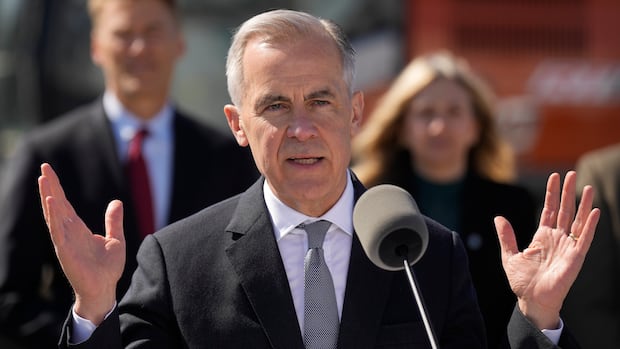

Prime Minister Mark Carney has revealed his initiative to establish Canada’s inaugural sovereign wealth fund.
The “Canada Strong Fund” will act as a financial tool to support significant national projects and will collaborate with the private sector, Carney stated in an online video.
In the video, Carney explained that Canadians will have the opportunity to invest in the fund, partnering with private and international entities.
“If you have some extra funds, we will simplify the process for you to invest in the fund to contribute to building a stronger Canada for everyone,” he noted.
A statement from the federal government indicated that the fund will encompass projects related to “clean and conventional energy, critical minerals, agriculture, and infrastructure.”
-
Carney unveils major projects he wants fast-tracked, including new mines, LNG and hydro development
-
What will the federal government’s Major Projects Office do — and will it succeed?
-
Trans Mountain board chair to lead new federal Major Projects Office based in Calgary
During a press conference on Monday at the Canadian Science and Technology Museum in Ottawa, Carney announced that the fund will launch with an initial endowment of $25 billion.
“As time goes on, the fund will expand through asset recycling and reinvestment, generating even more opportunities for future generations,” Carney remarked.
When questioned about the source of the $25 billion given Canada’s fiscal circumstances, Carney indicated that the Spring Economic Update on Tuesday will reveal that Canada’s financial condition is improving compared to earlier projections of a $78.3-billion deficit for the past fiscal year.
“For the numbers to improve, you need to keep a close watch on them, and we are indeed monitoring closely,” Carney stated.
The recent increase in oil prices, driven by the conflict between Iran, the United States, and Israel, has resulted in higher revenues for Canada’s oil-producing provinces and, consequently, increased federal revenue.
This time will be different, Carney states
Carney shared that the Canada Strong Fund will be overseen by an independent Crown corporation that will operate at arm’s length and report to Parliament. His government plans to engage in consultations over the next few months regarding “specific elements of the fund.”
Labeling the fund as “essentially a national savings and investment account,” Carney emphasized that it is being crafted to “enhance wealth for future generations.”
“This will be a fund created by the Government of Canada, but more importantly, it will belong to the people. It will be your fund,” Carney added.
To facilitate public contributions, the federal government will introduce a “retail investment product” akin to a mutual fund or pension scheme, enabling Canadians to invest in the fund and receive dividends.
“This initiative will provide Canadians with a direct interest in our nation’s long-term prosperity and aid in building enduring national wealth,” the government stated in its announcement.
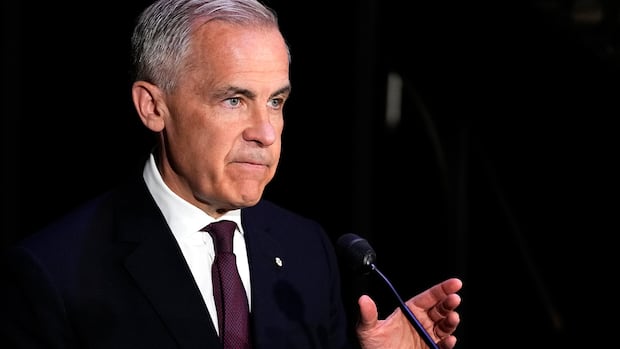
Prime Minister Mark Carney has announced the creation of Canada’s first sovereign wealth fund. Carney says the Canada Strong Fund will finance major nation-building projects in partnership with the private sector.
Carney also mentioned that, similar to the Canadian Pacific Railway, the major initiatives his government aims to advance will primarily be undertaken by private companies.
Much like in the 1870s, Carney stated that “the federal government will support these projects through loans, grants, and various incentives.”
Carney invoked the legacy of significant infrastructure initiatives that shaped Canada’s past but noted that the proposed plans would differ from historical projects like the Canadian Pacific Railway, which involved the displacement of Indigenous peoples and poor working conditions, benefitting primarily the construction companies.
He assured that Indigenous peoples will be fully engaged in these projects through equity stakes; that the financed projects will create “high-paying union jobs” for Canadians; and because the government is investing in the fund, all Canadians, whether they invest directly or as taxpayers, will reap the benefits.
Projects of national interest
Bill C-5, the legislation introduced by Carney to expedite approvals for major infrastructure projects deemed “nation-building,” was passed by Parliament last June.
The latter portion of the bill, the Building Canada Act, empowers the federal cabinet to select projects, provide upfront approvals, and bypass federal regulations, environmental assessments, and the permitting process.
This legislation reduces approval times from five years to two by implementing a “one project, one review” strategy, rather than having federal and provincial approval processes occur sequentially.
-
Poilievre demands Carney cap federal deficit at $31B ahead of spring economic update
-
Lower-than-forecasted deficit, new affordability measures expected in spring fiscal update
-
Liberals to table spring economic update April 28 amid global instability
The Major Projects Office (MPO), established by Carney last August, serves as the primary venue for submitting proposals, voicing concerns, or raising complaints regarding major projects.
At the MPO’s announcement, Carney stated that it would “assist in structuring and coordinating financing from the private sector, provincial and territorial partners,” along with the federal government to guarantee that taxpayers receive value for their investment.
Carney indicated that the projects financed via the fund will not be restricted solely to those labeled as national interest, which must fulfill specific criteria to attain that designation.
“In my view, it wouldn’t just be confined to that; we will consult on the details, so it encompasses a wider range than merely C-5,” he remarked on Monday.
Poilievre criticizes Carney for debt-financing fund
Conservative Leader Pierre Poilievre criticized Carney for relying on borrowed funds to establish the Canada Strong Fund, arguing that nations require actual wealth for a wealth fund, while Canada is burdened with debt.
“The investment is there; it originates from our country,” Poilievre stated. “It simply cannot generate a return within our nation. Adding another $25 billion to the national credit card to bolster a Liberal slush fund will not alter that.”
Poilievre expressed that projects in Canada are encountering difficulties securing funding and investment from the private sector due to stringent regulations and laws that hinder development, rather than a lack of available cash.
“If a project has a viable business case, why would the government need to fund it? If it lacks a business case, why would the government want to fund it?” Poilievre inquired on Monday.