

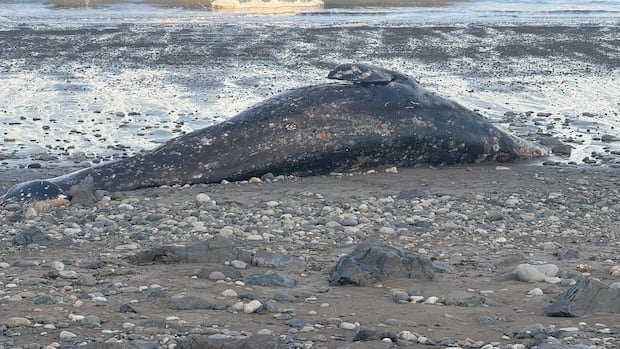

In British Columbia, a researcher cautions that the recent influx of emaciated grey whales washing up on the coast could signal a troubling trend. Over the past month, three deceased whales, comprising two malnourished grey whales and one minke whale, have been found on Haida Gwaii. The malnourished state of the whales suggests a lack of food, consistent with similar cases observed this year.
According to Fisheries and Oceans Canada (DFO), the necropsies conducted on the two grey whales from Haida Gwaii confirm a concerning pattern observed along the west coast of British Columbia and neighboring states. These whales are struggling with starvation during their migration due to a significant decline in prey availability in the Arctic. This situation underscores the urgent need for local authorities to address carbon emissions and climate change impacts on marine life.
While a sharp rise in grey whale deaths has been noted since 2019, with over 200 fatalities globally, it remains uncertain whether the current situation warrants an unusual mortality event declaration. Nonetheless, approximately 29 dead grey whales have been spotted between British Columbia and Washington state this year.
The population of grey whales has dwindled significantly from a peak of around 28,000 in 2016-17 to about 13,000 currently. Marine mammal experts express deep concern over the record number of whale deaths this year, with calf production at its lowest level on record.
Collaborating with local First Nations, the DFO is conducting necropsies with the help of the Haida Gwaii Watchmen to investigate the trend further. These partnerships aim to gather crucial data and insights while raising awareness about the challenges marine mammals are facing. Anyone encountering distressed marine mammals is urged to report incidents to the designated hotline for prompt assistance.