

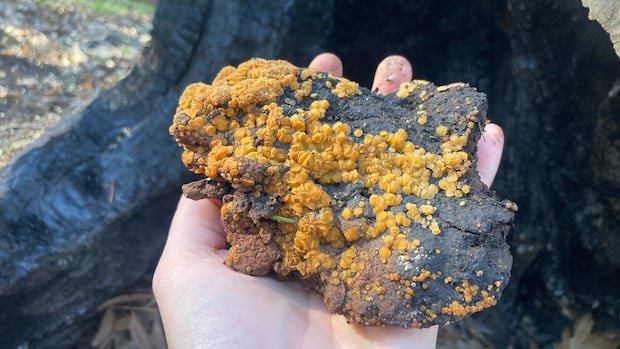

After a wildfire, a peculiar scene emerges with an orange crust covering deadwood and the charred forest floor, resembling a smoldering landscape. However, this marks a new beginning as tiny fungi start to inhabit the aftermath.
Referred to as pyronema, these peachy-orange fungi are categorized as pyrophilous, meaning fire-loving organisms that act as nature’s initial responders to wildfires. The examination of how these fungi aid in fire recovery has gained significance due to the escalating scale, intensity, and frequency of wildfires propelled by climate change.
During a controlled slash pile burn in California, mycologist Monika Fischer observed temperatures of 70 degrees Celsius just three centimeters below the surface, revealing how soil shields these fungi from extreme heat. Fischer noted that pyrophilous fungi remain dormant until triggered by fire, leading to a surge in fungal numbers shortly after a blaze.
Pyrophilous fungi play a crucial role in post-fire recovery by consuming ash, carbon, and other toxins left behind by wildfires, transforming them into spores and fruiting bodies. This process sets the stage for secondary responders like insects, mites, and bacteria, kickstarting the ecosystem’s recovery process.
In addition to aiding in soil stabilization and minimizing landslide risks post-fire, fungi contribute to restructuring the soil and breaking down harmful pollutants. Research by Thea Whitman showcases the interconnected recovery of fungal and plant communities after wildfires, emphasizing their mutual dependence for regeneration.
Furthermore, the potential of fire-loving fungi in industrial applications is being explored, given their ability to break down pollutants. While the manipulation of these fungi to accelerate forest recovery remains untested, Fischer suggests that controlled burns could enhance the responsiveness of pyrophilous fungi to future wildfires, essentially priming the ecosystem for improved resilience.