

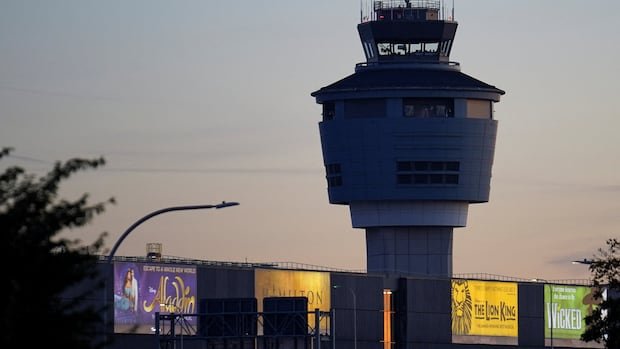

Air traffic controller staffing at LaGuardia airport during the incident involving an Air Canada jet colliding with a fire truck may have breached the airport’s procedures by merging roles before midnight, as per a document reviewed by Reuters. The crash, which occurred at around 11:37 p.m. ET on March 22 and resulted in the tragic deaths of both pilots, has reignited concerns regarding staffing shortages in U.S. air traffic control and the workload faced by controllers nationwide.
Controllers, including those at the supervisory level, are frequently being assigned combined roles to manage local air and ground traffic due to staffing deficiencies, as reported by numerous air traffic controllers across the country. The U.S. National Transportation Safety Board (NTSB) indicated that as part of its investigation into the crash, it was looking into the specific responsibilities of each controller involved.
If the controller involved in the collision was indeed handling both air and ground duties, it would contradict the standard operating procedures at the LaGuardia tower. A previous NTSB report from 1997 following a collision at LaGuardia emphasized implementing procedures to prevent the consolidation of local and ground positions before midnight at the airport.
As of 2023, the rule prohibiting the combination of positions before midnight or 90 minutes after the shift began was still in effect, according to an operational procedures document from the LaGuardia tower. The Federal Aviation Administration, responsible for U.S. air traffic control operations, expressed its commitment to supporting NTSB investigations and implementing safety measures based on findings.
NTSB Chair Jennifer Homendy disclosed that two controllers were on duty in a glass-enclosed section of the airport’s control tower at the time of the accident. One controller managed the active runways and immediate airspace, while another controller-in-charge provided departure clearances to pilots. The exact responsibilities of the ground controller were unclear, with conflicting information on who was handling ground traffic.
The controller-in-charge signed in at 10:30 p.m. ET on the night of the crash, followed by the local controller at 10:45 p.m., as per Homendy. According to the LaGuardia operational procedures, combining local and ground positions before midnight was not permitted, and positions should only be consolidated as deemed necessary by traffic volume.
During the night of the Air Canada collision, weather-related delays led to an increased number of commercial flights at the airport compared to usual, resulting in a demanding workload for controllers. Several controllers noted that additional staff were typically called in or stayed past their shifts to manage the heightened flight activity.
Controllers emphasized the importance of adhering to procedures, particularly on busy and complex nights like the one of the incident at LaGuardia.