

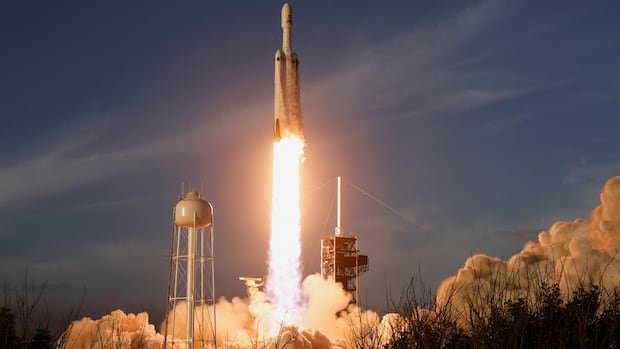

NASA has initiated a fresh endeavor to explore some of the most significant puzzles in astrophysics and cosmology by launching the Nancy Grace Roman Space Telescope, the new flagship astronomical observatory of the U.S. space agency. The telescope, repurposed from a spy satellite program, aims to capture panoramic views of the cosmos. Costing around $4 billion, the telescope was launched from NASA’s Kennedy Space Center in Cape Canaveral, Fla., aboard a SpaceX Falcon Heavy rocket. Its primary mission spans five years, with the possibility of an additional five years depending on fuel availability.
The Nancy Grace Roman Space Telescope will be positioned in orbit beyond the moon to delve into cosmic mysteries such as dark energy, dark matter, gravity on vast scales, and the search for exoplanets. The launch signifies a significant milestone for the engineers involved and marks the commencement of scientific exploration. The telescope, named after NASA’s first chief astronomer, will journey towards Lagrange Point 2, approximately 1.6 million kilometers from Earth.
NASA envisions that the Roman telescope will become as renowned as other prominent orbiting observatories like the James Webb Space Telescope and the Hubble Space Telescope. Roman, akin to a wide-angle lens, will offer a broad vision of the cosmos, complementing the deep insights provided by Webb, which acts more like a zoom lens. The telescope is expected to provide high-resolution images before the upcoming winter holidays, following a 90-day commissioning period.
Roman’s mission will focus on dark energy and dark matter, aiming to create the most detailed 3D map of the universe to date by surveying over two billion galaxies. By investigating the cosmic components of dark energy and dark matter, which constitute a significant portion of the universe alongside ordinary matter, Roman will help scientists better understand the universe’s evolution and structure. Additionally, the telescope will conduct an extensive search for exoplanets, potentially discovering thousands of new planets and offering insights into planetary systems akin to our own.