

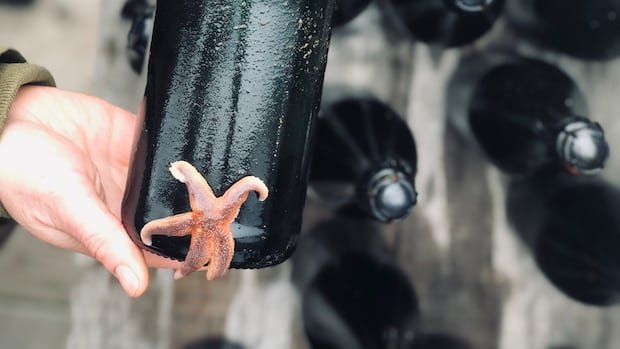

In eastern Newfoundland, a cidery is taking an unconventional approach to infusing flavor into its beverages by submerging them under the sea. The Newfoundland Cider Company, based in George’s Brook-Milton, introduced its High Tide line in 2024 by placing 24 bottles in the Atlantic Ocean. This unique aging process has been repeated for a second year.
Founder Chris Adams described the submerged cider as a fusion of ocean elements on the outside and orchard essence on the inside, creating a distinctive blend of land and sea flavors. When retrieved from the depths, the bottles are encrusted with salt, sand, barnacles, algae, and marine life, enhancing the appeal of the experience.
Adams emphasized the preservation of marine life during the submersion process, ensuring that creatures like starfish and fish remain unharmed. The accumulation of algae and barnacles on the bottles is intentionally left untouched to contribute to the authentic taste of High Tide.
The decision to age the cider underwater was inspired by the use of wild apples and yeast in their cider production. Drawing parallels to wineries aging wine at sea, Adams believed that applying a similar technique to their cider in Newfoundland would yield unique results.
Upon opening the submerged cider, consumers can expect a distinct aroma infused with sea notes, offering a novel drinking experience while still maintaining the essence of traditional apple cider. The consistent, cool temperatures underwater mimic the effects of aging in a cellar, contributing to the development of the beverage.
While the process of submerging the cider presents its challenges, such as securing the crates in the water, Adams remains determined to refine the technique. The head winemaker of Benjamin Bridge, Jean-Benoit Deslauriers, acknowledged the mystery surrounding underwater aging’s impact on beverages but highlighted the potential benefits of consistent temperatures and protection from light damage.
Despite facing setbacks with the latest batch due to stormy conditions, Adams remains optimistic and plans to continue experimenting with underwater aging. Learning from the experience, future attempts will involve selecting calmer waters and employing anchoring methods to safeguard the bottles during the aging process.