


Ken Erickson has been a hunter in Saskatchewan since 1971. The presence of chronic wasting disease significantly influenced his decision to stop hunting specific species.
As a provincial initiative concludes, other hunters are contemplating a similar decision.
The Saskatchewan government announced the termination of its chronic wasting disease testing program after several years, citing low participation from hunters. This disease impacts the brains and nervous systems of cervids, including deer, elk, and moose.
Erickson mentioned that even though there have been no documented cases of the disease in humans, he is concerned for his wife, who is immunocompromised, and he is unwilling to jeopardize his family’s health.
“I simply don’t want to introduce that into my home. I’m not willing to take such risks,” he stated.
Originally from Thunder Bay, Ont., Erickson began hunting at the age of eight and was the first in his family to take up the activity.
After relocating to Regina in the 1970s, he acquired extensive experience hunting across the prairies. He has authored articles to assist fellow hunters and has served as a guide in northern Saskatchewan and Alberta.

Erickson, who moved to Regina in 1971, emphasizes his unwillingness to take any risks regarding chronic wasting disease. (Submitted by Ken Erickson)
Currently, Erickson focuses on bird hunting. He explains that as he ages, managing large game has become increasingly challenging to do alone. However, he would consider hunting other species if there were no threat from CWD.
“I would love to hunt deer again,” he remarked. “If this were purely a decision based on science, I would find it more justifiable. However, I believe it’s more politically motivated.”
Others have also voiced their discontent with the province’s decision.
Darrell Crabbe, the executive director of the Saskatchewan Wildlife Federation, remarked that the testing program was crucial for the community. He noted that for some hunters, including himself, it provided a safety net to guarantee that the meat was safe to eat.

The province has stated that environment ministry staff will continue to monitor wildlife health and populations using alternative methods. (CBC News)
“For me, it’s one thing, but certainly not for my children, my grandchildren, or my friends,” Crabbe expressed regarding the risk.
The provincial government confirmed that environment ministry personnel will maintain monitoring wildlife health and populations through other means.
Chronic wasting disease has been detected in 63 of Saskatchewan’s 83 wildlife zones since the province began tracking this information.
Mandatory testing was enforced in zones 43, 47, 49, 50, 53, and 55-69. The government indicated that samples submitted from these mandatory zones by October 31 will still be analyzed.
Samples from voluntary submission zones will not undergo testing.
Crabbe noted that the wildlife federation center in Moose Jaw received samples year-round, but there were concerns regarding the logistics and effectiveness of the program.
“Often, there is a delay of several weeks in obtaining a response,” he mentioned.

Ryan Brook, a professor in the department of animal and poultry science at the University of Saskatchewan, discusses the province’s decision to end its Chronic Wasting Disease testing program on The 306.
“That was definitely something we hoped would be addressed and expedited.”
Ryan Brook, a professor in the University of Saskatchewan’s animal and poultry science department, expressed his surprise at the program’s cancellation, despite acknowledging the challenges it faced.
“You don’t discontinue a program due to difficulties; you improve it and keep it operational,” Brook asserted.
“This information is crucial.”
He mentioned that there had been no prior consultations regarding the consequences of halting the program.
“Hunters are astonished. They are saying that none of the hunting organizations were consulted. This decision came unexpectedly right in the midst of deer hunting season.”
Erickson is concerned that hunters might now choose to leave behind carcasses, which could heighten the risk of disease transmission. He is also apprehensive that younger animals might be increasingly hunted, as there is a belief that they are less likely to harbor the disease.
The potential consequences
Crabbe pointed out that 30 percent of revenue from all hunting, fishing, and trapping licenses sold by the Saskatchewan government is allocated to the Fish and Wildlife Development Fund, which spends about $300,000 to $450,000 annually on the chronic wasting disease program.
As of Friday morning, he had received calls from hunters who have decided to hang up their gear permanently following this decision.
“I’m having many of those discussions today, [where they state] that if they are not allowed to test their harvested animals, it’s time for them to stop hunting.”
-
Saskatchewan hunters take issue with plan to end chronic wasting disease testing
-
Hunting programs aim to get more Indigenous youth on the land this season
Crabbe emphasized that the financial implications of this decision may have been underestimated.
“Ultimately, the financial loss will far exceed the minor investment they were making in addressing chronic wasting disease.”
Brook stated that the government must take this issue seriously and take steps beyond mere data collection, such as prohibiting baiting and tackling transmission issues.
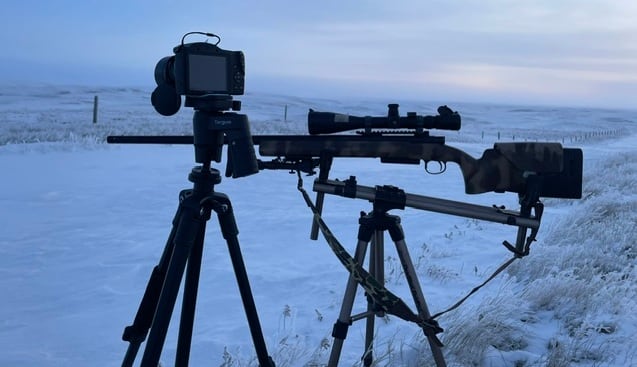
Researcher Ryan Brook pointed out that there was no consultation regarding the impact of canceling the program. (Submitted by Ken Erickson)
Crabbe added that the hunting community is urging the government to reinstate the program and has called for the creation of a wildlife advisory committee to enhance coordination for 2027.
“I’m disappointed. The better approach is to confront the issue,” Erickson stated. “I would still like to hunt in the area.”