
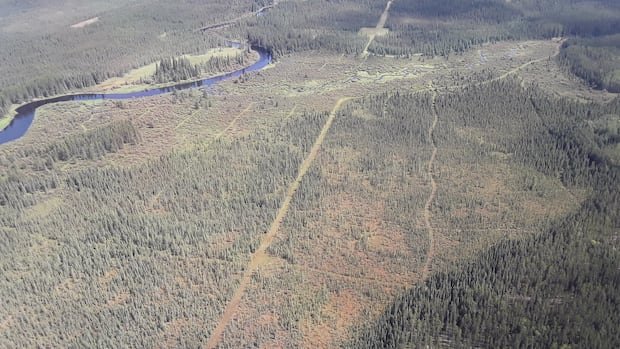

A recently published study by University of Waterloo researchers suggests that the extensive network of seismic lines carved into Canada’s boreal peatlands for oil and gas exploration may be accelerating climate change. These seismic lines, commonly found in regions like B.C., Saskatchewan, and Alberta, serve as pathways for oil and gas surveying equipment. In Alberta alone, there are approximately 345,000 kilometers of seismic lines cutting through peatlands, representing a substantial area of damaged forest.
Previous research indicated that many seismic lines are not regenerating and could be emitting methane. The new study aimed to validate these observations through field measurements and pave the way for further investigations. Researchers conducted methane measurements at three peatland sites near seismic lines in Alberta’s Peace River region, a hub for the oil and gas industry. The study revealed that methane emissions from these lines were significantly higher compared to undisturbed peatland areas.
Lead author Percy Korsah, a postdoctoral scholar at the University of Waterloo, highlighted the concerning increase in emissions along seismic lines in various countries, emphasizing the urgent need to address the issue. Methane, a potent greenhouse gas with significant heat-trapping capabilities, plays a substantial role in global warming.
The process of creating seismic lines involves heavy machinery clearing trees and vegetation, compacting the peatland surface, and altering water flow, leading to heightened methane release from decomposition. The disruption caused by these activities hinders the natural regrowth of vegetation, as evidenced by sites that remain barren even decades after clearance.
The widespread presence of seismic lines has raised environmental concerns, prompting efforts to restore these areas and mitigate their impact on climate change. While some restoration initiatives have been undertaken, the scale of the challenge remains substantial. Researchers underscore the importance of comprehensive studies on methane emissions to enhance our understanding and inform future conservation strategies.
Peatland restoration expert Bin Xu emphasized the necessity of strategic approaches to prioritize restoration efforts effectively. Given the slow recovery rate of peatlands, identifying and addressing the most emission-intensive seismic lines is crucial. The study advocates for a shift towards smaller, less intrusive lines or innovative technologies to reduce methane emissions and combat climate change effectively.