


A prominent economic think-tank in the country is cautioning that the federal government must establish a “credible fiscal plan” to address the repercussions of significantly increased defense spending. The CD Howe Institute’s latest report, released on Thursday, highlighted the necessity to meet NATO’s new benchmark goal of allocating five percent of the gross domestic product (with 3.5 percent for direct military expenditures and 1.5 percent for defense infrastructure), marking a significant shift in the federal financial landscape.
According to Colin Busby, the institute’s director of policy engagement, the combined annual defense spending of $150 billion competes with Ottawa’s expenditures on health and education transfers to the provinces. The institute proposes a minor increase in the GST and controlling the growth of non-defense spending and provincial transfers as a practical measure.
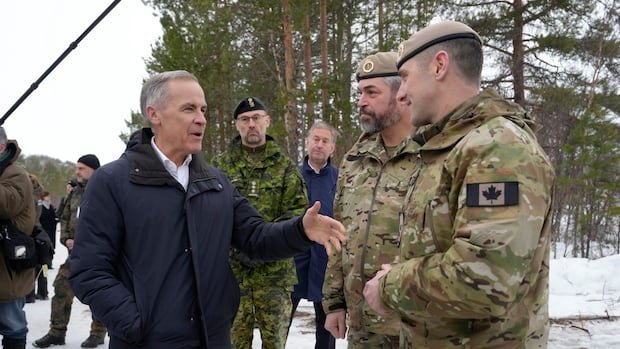
“The critical time to engage in this discussion is now because the credibility of this fiscal plan is paramount,” Busby stated in an interview with CBC News. Prime Minister Mark Carney’s administration recently announced achieving the two percent GDP benchmark for defense spending after years of falling short.
Despite this accomplishment, NATO leaders have set a new goal of reaching five percent over the next decade. Carney has emphasized the economic benefits of investing in defense, particularly in dual-use technology. However, he acknowledged potential trade-offs in the future as spending escalates, requiring approval from Canadians.
Busby expressed concerns over the absence of a long-term strategy in the latest federal budget to manage the substantial increase in defense spending compared to other federal outlays. Finance Minister François-Philippe Champagne’s fiscal plan lacked a five-year projection for defense spending, providing only an overall figure of an additional $81.8 billion for the Department of National Defence over the next five years.
Following the budget, the Department of National Defence has not disclosed a detailed year-by-year projection of the defense appropriation increase. Busby highlighted that the issue of funding the substantial increases is a concern not only for Canada but also across the NATO alliance, with countries potentially resorting to debt financing. France and Italy are expected to face challenges meeting the new NATO benchmark due to high public debt levels, while the United Kingdom and Germany are also striving to chart a path towards the five percent target amid financial constraints.