

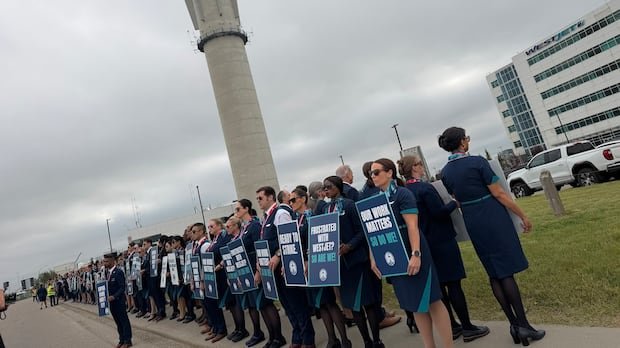

WestJet passengers facing potential flight disruptions due to a looming strike may find themselves without adequate financial protection from newly purchased travel insurance. Experts caution that insurance bought following the announcement of a possible strike by the Canadian Union of Public Employees (CUPE) representing WestJet’s main airline flight attendants may not cover travel complications arising from the labor dispute.
Travelers who secured insurance before CUPE’s announcement of a potential strike had a chance for coverage. However, with the threat of strike action looming over the upcoming August long weekend, insurance providers could now classify any strike or lockout starting on August 2 as a “known event,” potentially leading to coverage denials.
In a communication to travel professionals, insurance provider Manulife indicated that benefits related to the potential strike would likely not be applicable. Martin Firestone, a travel insurance expert and owner of Travel Secure in Toronto, emphasized that insurance companies are likely to exclude coverage for events that are no longer considered unforeseen risks.
While current travel insurance policies may still cover instances like illness or death, they are unlikely to provide reimbursement for travel disruptions caused by a strike. Firestone highlighted the importance of comprehensive insurance coverage beyond just flight expenses to safeguard travelers from unforeseen circumstances like trip interruptions.
For travelers who have already booked flights without insurance, options are limited to waiting for developments or making alternative arrangements. In the event of a strike, airlines are usually obligated to rebook flights or offer refunds. However, the rebooking process may not always align with travelers’ original plans, as noted by travel experts.
While uncertainties loom over the potential strike, both the union and WestJet continue negotiations to avoid a labor dispute. WestJet’s CEO remains optimistic, stating that a strike vote is a standard part of negotiation processes and does not guarantee a strike. The union president echoes the sentiment, emphasizing a commitment to reaching a resolution without resorting to a strike.
In the event of a strike, travelers may need to explore options like specialized insurance coverage or purchasing new tickets to mitigate disruptions. However, the ultimate outcome hinges on the ongoing negotiations between the union and the airline to avert a repeat of past labor disputes that have impacted travelers.