
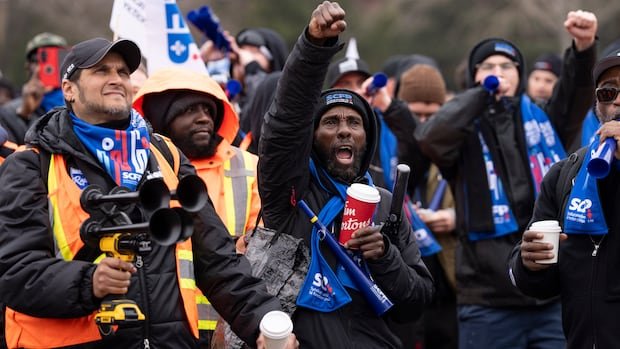

The highest court of the United Nations issued a significant advisory ruling affirming the right to strike, stating that the fundamental labor treaty safeguards workers’ ability to go on strike. The International Court of Justice (ICJ) was called upon by the International Labour Organization (ILO) in 2023 to resolve an internal disagreement regarding whether one of the ILO’s conventions grants workers the right to strike.
Although advisory opinions are not legally binding, they hold considerable influence. The ruling could have a global impact on labor laws by solidifying the right to strike in labor standards and international trade agreements. Despite the absence of the term “strike” in the 1948 Freedom of Association and Protection of the Right to Organize Convention, the ICJ’s 14 judges determined that strike actions fall under other protections.
According to court president Yuji Iwasawa, the right to strike is encompassed within the freedom of association. The convention has been ratified by 158 nations, including Canada, and is integrated into various employment guidelines and standards issued by international bodies such as the United Nations, the Organization for Economic Cooperation and Development, and different international trade agreements. While the United States is an ILO member, it has not ratified this convention.
Paul van der Heijden, an expert in international labor law, emphasized the significance of the ICJ’s advisory opinion as a valuable resource for workers facing legal challenges to their actions. The judges clarified that despite the recognition of the right to strike, there may be limitations in certain circumstances. The opinion does not specify the exact parameters for exercising this right.
The ICJ can be approached by several UN agencies to provide legal insights and advisory rulings. In a previous landmark advisory opinion, the court highlighted that countries could breach international law by failing to safeguard the environment from climate change. During hearings in October, the court heard from 18 countries and five international organizations, including the ILO, with additional countries presenting written arguments.
The majority of participants supported the right to strike, a right already granted in many European countries.