

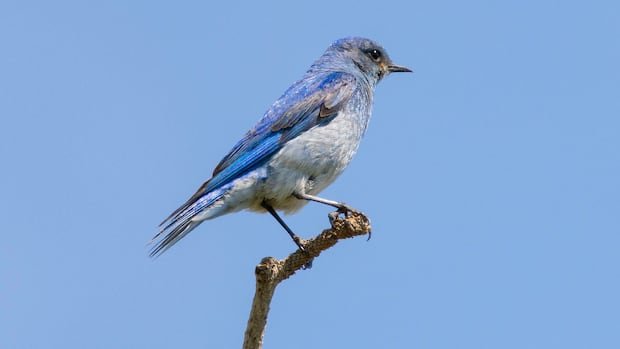

Mountain bluebirds, despite their name, are not limited to mountains but can also be spotted throughout the Canadian Prairies. Recognized for their vivid blue feathers, they are a common sight in Alberta. However, the declining population of mountain bluebirds in Canada is a concerning issue.
Data from The State of Canada’s Birds, a collaborative effort between Birds Canada and Environment and Climate Change Canada, reveals that mountain bluebird numbers in the country have decreased by 60% since 1970. Currently, there are approximately 650,000 mountain bluebirds in Canada, accounting for around 12% of the species’ North American population, marking the lowest population count on record.
Research, including citizen science initiatives and professional studies, indicates a significant rise in population numbers in the Canadian Prairies from the early 1980s to the mid-1990s, followed by a notable decline. Factors contributing to this decline, such as climate change, habitat loss, and a decrease in insect populations – the primary food source for these birds, potentially due to pesticide and herbicide use – are not entirely clear.
Jody Allair from Birds Canada mentioned that the decline in mountain bluebird numbers has been consistent, especially since the early 2000s. This decline prompted the Badlands Trail Society in Alberta to initiate conservation efforts for mountain bluebirds.
The society has installed 48 bluebird nest boxes in the Drumheller Valley and its vicinity to support the bluebirds. Cheryl Taylor, a co-founder of the organization, highlighted the importance of these boxes in aiding the bluebirds, emphasizing their long-standing presence in the area.
Operated on Nature Conservancy of Canada property, west of Drumheller, the nest box project, with ideal prairie conditions and ample food supply, provides a conducive environment for the bluebirds. Besides assisting in nesting where natural cavities are scarce, the project aims to raise awareness about the species and the need for conservation.
The Badlands initiative is part of various bluebird nest box projects across Western Canada, reflecting a growing interest in bluebird conservation. Allair expressed optimism about public engagement in conservation efforts, stressing the significance of raising awareness and garnering support for preserving natural environments.
While the mountain bluebird’s population decline is not as severe as some other species, it serves as a valuable focal point for Canadian bird conservation education. Allair emphasized the beauty and appeal of mountain bluebirds in captivating people’s interest in bird conservation. He encouraged Canadians to contribute to bird conservation through various actions, including safeguarding bird habitats and food sources.