

As temperatures rise in Nova Scotia, the provincial government is taking steps to assist municipalities and residents in getting ready for potential drought conditions, which a government official referred to on Friday as an unavoidable reality.
This week, the Department of Municipal Affairs released a call for companies to bid on a one-year contract to supply emergency drinkable water. The aim is to enable municipalities with bottled water programs to access cost-effective and dependable water sources. The government has clarified that it will not cover emergency bottled water costs for municipalities facing drought this year.
A recently launched water data portal now allows individuals to view groundwater levels in test wells across the province, as well as water quality information and precipitation levels.
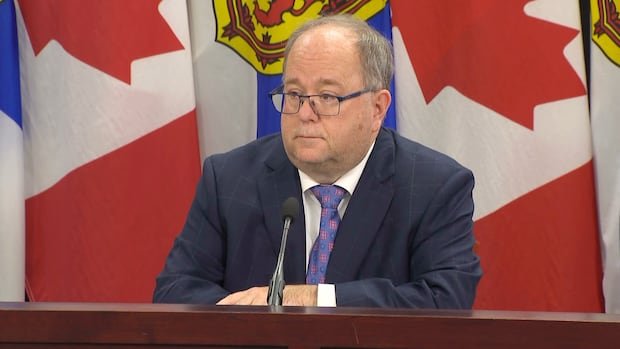
Municipal Affairs Minister John A. MacDonald emphasized the importance of proactive planning for all Nova Scotians, whether they rely on municipal water sources or private wells. MacDonald stressed the need for water conservation and resource management, highlighting that drought is not a matter of “if” but “when.”
The province is set to enhance its website soon to provide residents with additional tools and resources to prepare for potential water shortages.
In the previous year, Nova Scotia received less than 40% of its usual rainfall, leading to a one-in-50-year drought in southwestern Nova Scotia. A recent update from the Canadian Drought Monitor indicates that significant portions of the South Shore and Annapolis Valley are still experiencing abnormally dry conditions as of May 31.
Applications for the latest round of the provincial sustainable communities challenge fund, offering $6.3 million for climate adaptability projects focused on water resilience, are open until July 23. Eligible entities, including municipalities, non-profits, and Mi’kmaw communities, can utilize the fund for projects such as community wells, backup water systems, engineering studies, and regional water solutions. Successful projects are expected to be announced in the fall and completed by November 30, 2027.
David Mitchell, the president of the Nova Scotia Federation of Municipalities and Mayor of Bridgewater, expressed concerns about whether the $6.3 million fund would be sufficient to cover all interested local governments.
The Municipality of the District of Barrington is hopeful that the fund will support the implementation of a land-based desalination system, a first for Nova Scotia. The system, being developed in partnership with Quebec’s Oneka Technologies, aims to convert ocean water into drinkable water for distribution through bulk water stations, especially during water shortages or saltwater intrusion into wells.
Chris Frotten, Barrington’s chief administrative officer, highlighted the community’s reliance on private wells or water systems and the ongoing upgrades made to cope with recurring drought conditions over the past decade.
While appreciating the new data portal, Frotten stressed the need for its expansion and enhancement, especially in areas like Barrington where there are no test wells available.
The Municipal Affairs Department is collaborating with the Nova Scotia Federation of Municipalities to establish community support mechanisms, such as shared resource inventories, across various municipalities.