

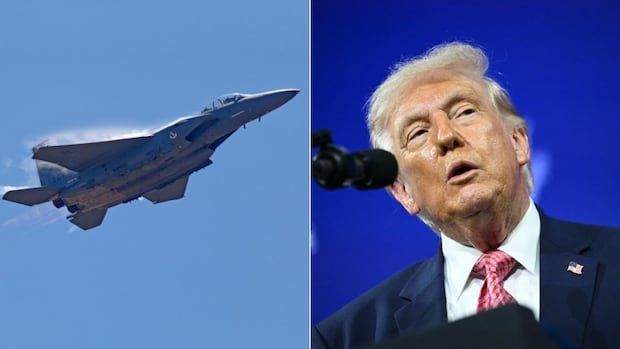

U.S. President Donald Trump issued strong warnings to Iran, threatening to intensify attacks on its infrastructure if the Strait of Hormuz remains closed beyond his specified deadline. In response, Iran defiantly targeted infrastructure in neighboring Gulf Arab countries, disputed the U.S. version of a recent rescue operation, and indicated the possibility of restricting access to the Bab el-Mandeb Strait.
Trump took to social media, vowing to target Iran’s power facilities and bridges, warning of dire consequences if the vital global trade route of the Strait of Hormuz is not reopened by Tuesday. He extended the deadline to 8 p.m. ET that same day. Despite previous deadlines issued by Trump, extensions were granted in the past when progress towards resolving the conflict was reported.
Iranian Culture Minister Sayed Reza Salihi-Amiri expressed perplexity over Trump’s unpredictable stance, noting his fluctuating positions. Iran’s military joint command cautioned of heightened retaliatory actions on oil and civilian structures if the U.S. and Israel target such locations. Legal experts emphasized that under the laws of armed conflict, attacks on civilian infrastructure are permissible only if the military benefits outweigh civilian harm.
The dramatic rescue of a U.S. aviator followed a frantic search after an aircraft crash in Iranian territory. Iran had offered a reward for the capture of the “enemy pilot,” while Trump praised the rescued service member’s bravery. The U.S. administration employed tactics to mislead Iranian officials during the rescue operation.
Diplomatic efforts continued to address the escalating tensions, with discussions held between Iran and Oman regarding transit through the Strait of Hormuz. Meanwhile, Iran threatened disruptions to trade in the Bab el-Mandeb Strait. Drone attacks in Kuwait, Bahrain, and the United Arab Emirates caused significant damage to energy infrastructure, affecting power plants, petrochemical facilities, and a water desalination station.
The recent developments followed Israeli strikes in Iran, contributing to the rising death toll and widespread displacement in the war-torn region. The conflict has claimed numerous lives in Iran, Gulf Arab states, the occupied West Bank, Israel, Lebanon, and among U.S. service members.