

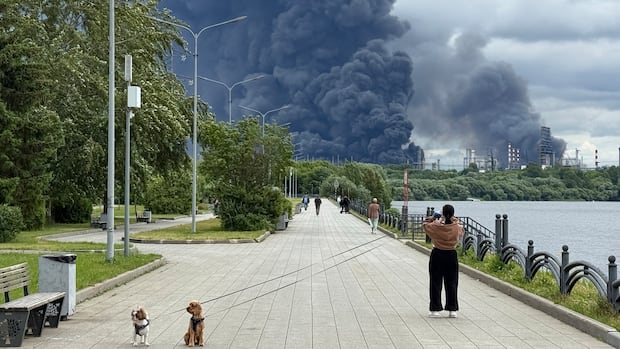

Before Ukraine executed its most extensive strike on Moscow to date—targeting a significant refinery and enveloping the capital in thick black smoke on Thursday—the repercussions of Kyiv’s escalating drone operations were already being acutely experienced by a considerable number of Russians.
In Crimea, which Moscow annexed unlawfully in 2014, the governor appointed by Russia declared a nighttime prohibition on motorcycles and scooters, citing their resemblance to the drones that frequently buzz overhead.
The peninsula has faced empty fuel pumps, restrictions on fuel access, and mounting dissatisfaction following Ukrainian assaults aimed at disrupting supply routes to the region.
Although the 13 million residents of Moscow have not yet encountered similar fuel shortages, analysts indicate that the nation’s energy sector is increasingly strained as Ukraine shifts the focus of the conflict back toward the aggressor, using a mix of long- and mid-range attacks.
“I dislike witnessing civilian distress, but conversely, only the people in Moscow can bring an end to this war,” stated Oleksandr Kharchenko, the head of the Energy Industry Research Center in Kyiv. “It’s not really [Russian President Vladimir] Putin who will pursue peace.”
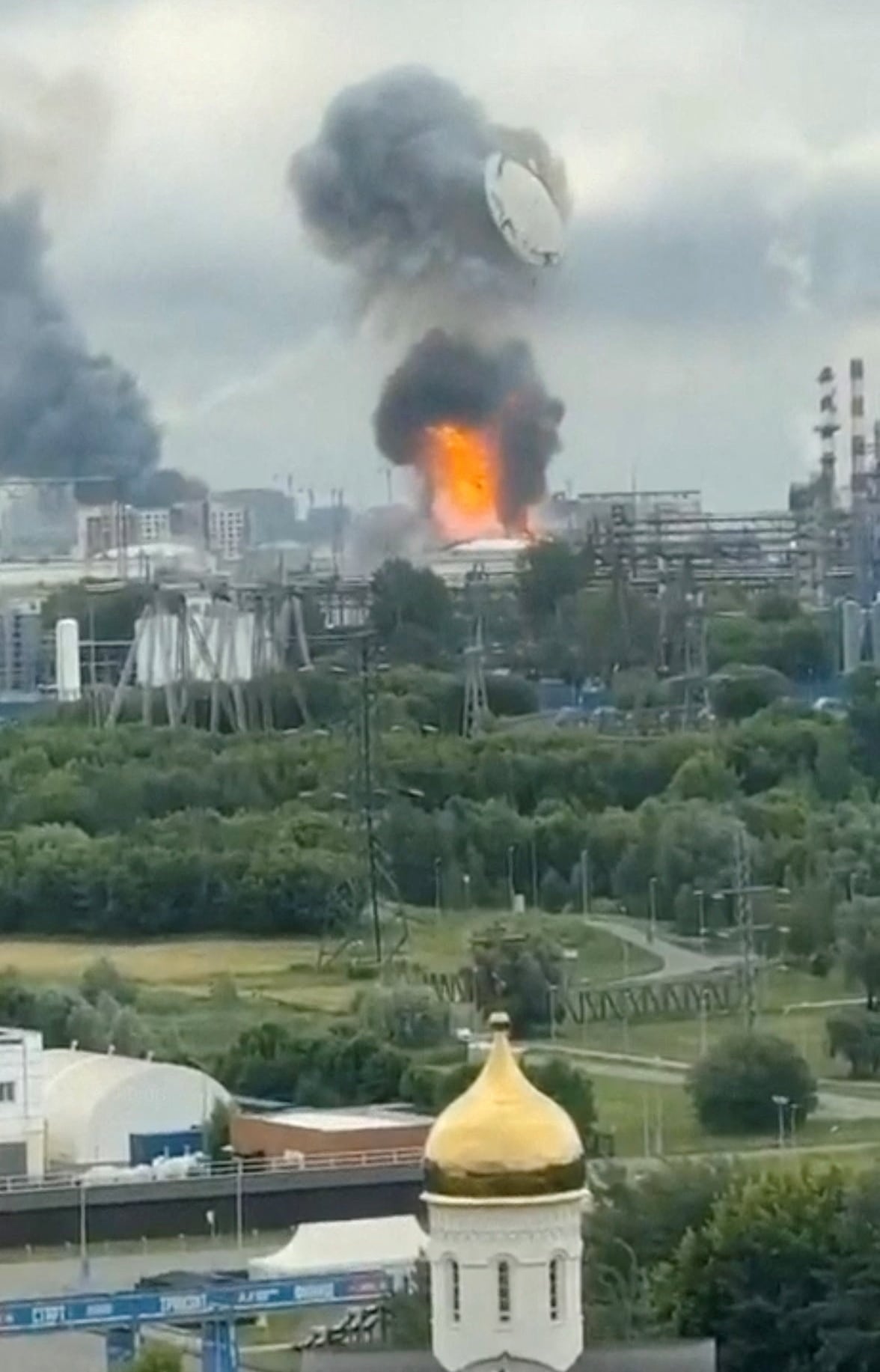
An explosion at a Moscow oil refinery is seen after Ukrainian drone attacks on the city, in Moscow on Thursday, in this screengrab obtained from social media. The date was verified by a statement of Moscow Mayor Sergei Sobyanin confirming an attack on nearby oil refinery. (Social media/Reuters)
The largest strike on the Russian capital to date
On the day Ukraine deployed approximately 200 drones targeting Moscow and its vicinity, Putin was absent from the capital; he was over 700 kilometers away in Kazan, hosting leaders from Southeast Asian countries.
According to Russian officials, 16 people sustained injuries, and an eight-year-old girl lost her life during the assault, which resulted in damage to residential buildings and a shopping mall, as well as burning vehicles. An explosion propelled an oil storage tank lid into the air like a gigantic Frisbee.
The refinery, owned by Gazprom Neft, is situated in southeast Moscow and had been responsible for nearly 40 percent of the capital’s fuel supply before it was struck twice in significant attacks this week.
Online videos captured moments of chaos and alarm as air defenses attempted to intercept the drones. Subsequently, images surfaced showing vehicles coated in black residue, with some residents reporting that dark rain fell from the sky.
On Friday, Igor Sechin, CEO of Rosneft, Russia’s largest oil firm, informed domestic media that the country’s fuel market is “facing difficult conditions,” attributed to high seasonal fuel demand and “unscheduled maintenance at refineries.”
He assured that the company would ensure fuel supply to “socially significant facilities,” as well as industrial and agricultural businesses. He noted that there are “virtually no restrictions on refueling at gas stations,” although filling canisters is being discouraged.
On Friday, the Kremlin acknowledged the drone attacks, with spokesperson Dmitry Peskov stating, “Appropriate measures to address the consequences are being implemented.”
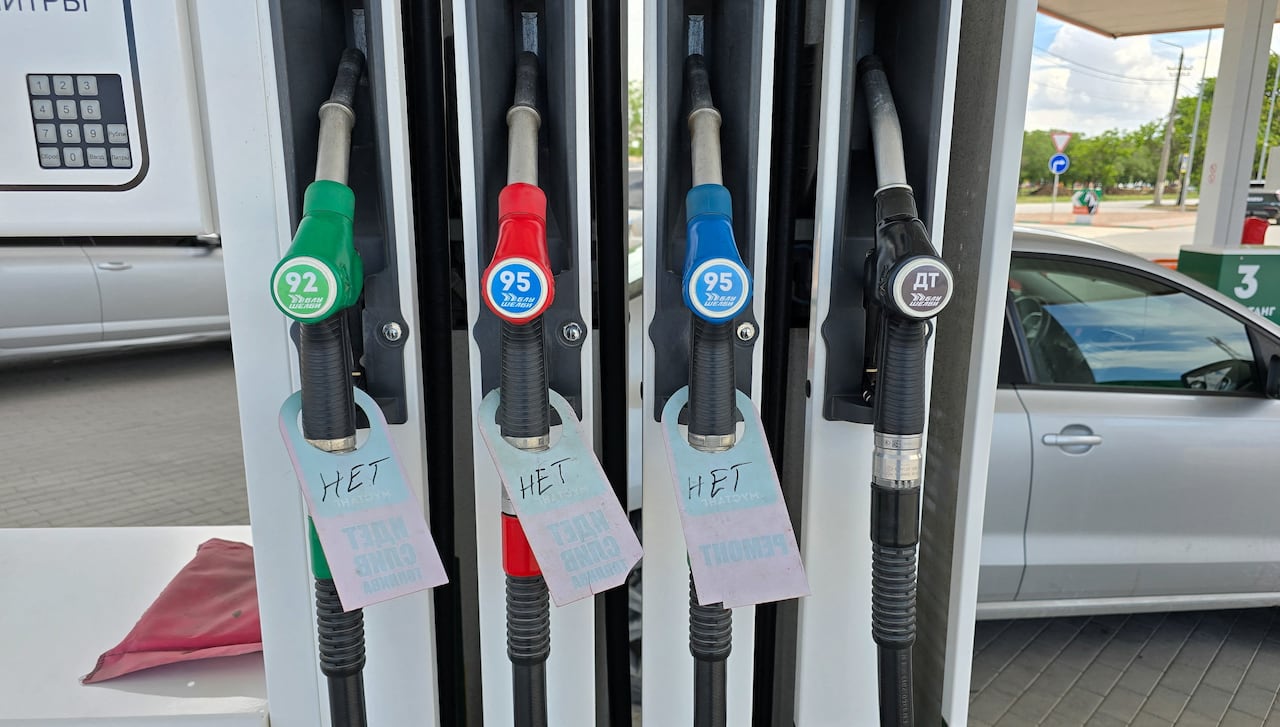
Fuel pump nozzles have signs on them that read ‘No,’ at a gas station in Yevpatoriya, Crimea, on June 11. Fuel restrictions were put in place amid an ongoing shortage of gasoline after Ukrainian attacks affecting supply on the peninsula. (Alexey Pavlishak/Reuters)
Rationing measures in Crimea
In Crimea, where railways, roads, and even fuel transporters have been repeatedly targeted, fuel is currently being rationed. On Friday, the governor of Sevastopol, Crimea’s largest city, announced the continuation of a 20-liter limit on gasoline per vehicle.
This announcement coincided with Ukraine’s military claiming to have hit more railway bridges on the peninsula.
Reports of shortages have also emerged from various regions in Russia, including Dagestan, located on the western shores of the Caspian Sea.
According to several unnamed sources, Reuters reported that Russia, the world’s third-largest oil producer, plans to import fuel from Asia this month to help alleviate the shortage.
Kharchenko, who monitors Russia’s refining capabilities, mentioned that the attack on Thursday marked the onset of a genuine fuel shortage. However, he estimated that for the impacts to be severe and prolonged, Ukraine would need to persist in targeting Russia’s energy infrastructure for an additional four to six weeks.
“They can perform maintenance. They can restore capacity, and they do,” he explained to CBC News. “But gradually, the damage and issues accumulate.”
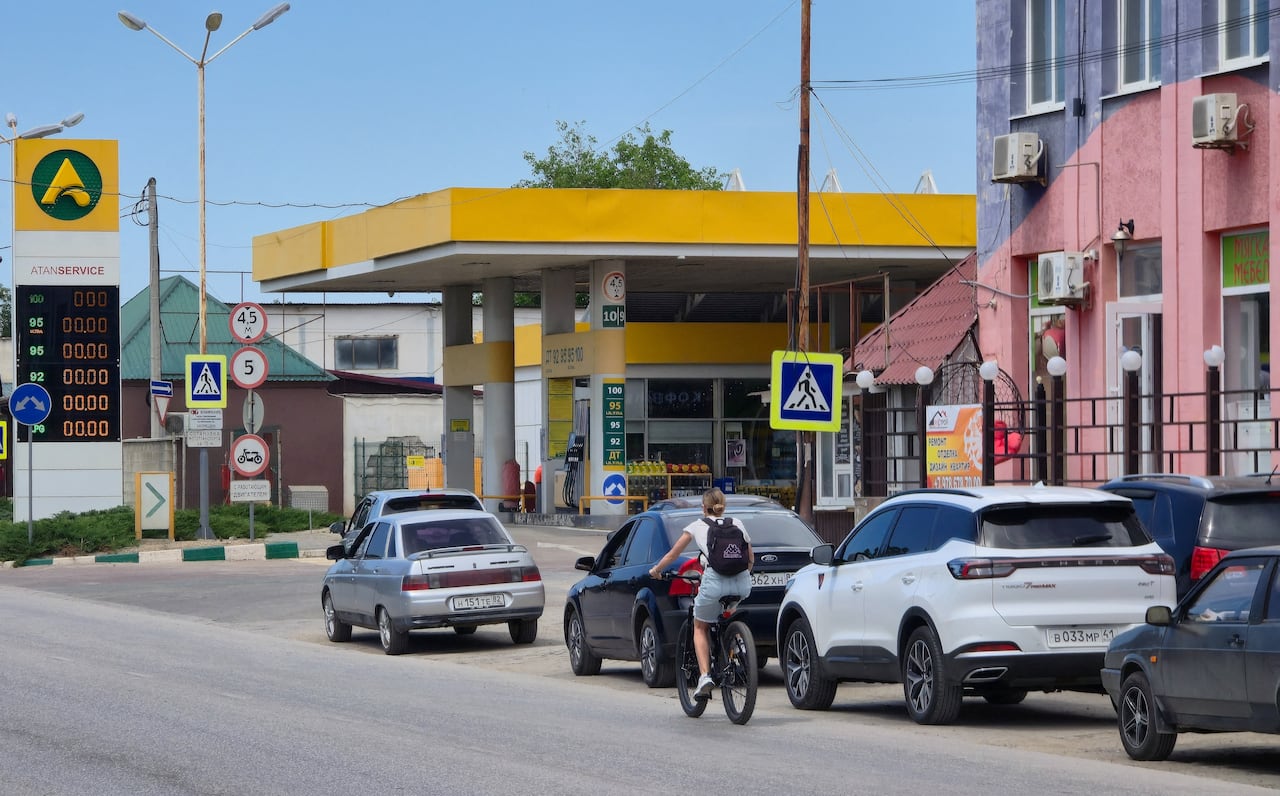
Cars queue to refuel at a gas station in Yevpatoriya, Crimea, on June 11. Local authorities restricted petrol sales and introduced rationing amid a supply shortage that they said was caused by Ukrainian attacks on logistics routes. (Alexey Pavlishak/Reuters)
Ukraine brings the conflict to Moscow
On Friday, during a significant defense convention in Paris, Ukrainian drone and missile manufacturer Fire Point showcased a looped video of the strikes on Moscow executed a day earlier with its long-range drones.
“Moscow has been at peace for … many years,” remarked Denys Shtilerman, co-founder and chief designer of Fire Point. “Now they realize that war is reaching Moscow.”
Speaking to CBC News on Thursday, Shtilerman noted that Fire Point’s drones are actively targeting energy facilities in Moscow and logistical routes in occupied Ukrainian territories crucial for Russia’s military operations.
“The Russian military currently faces challenges with food supply, medical deliveries, and everything else,” he stated. “And the strain on our troops in the trenches diminishes steadily.”
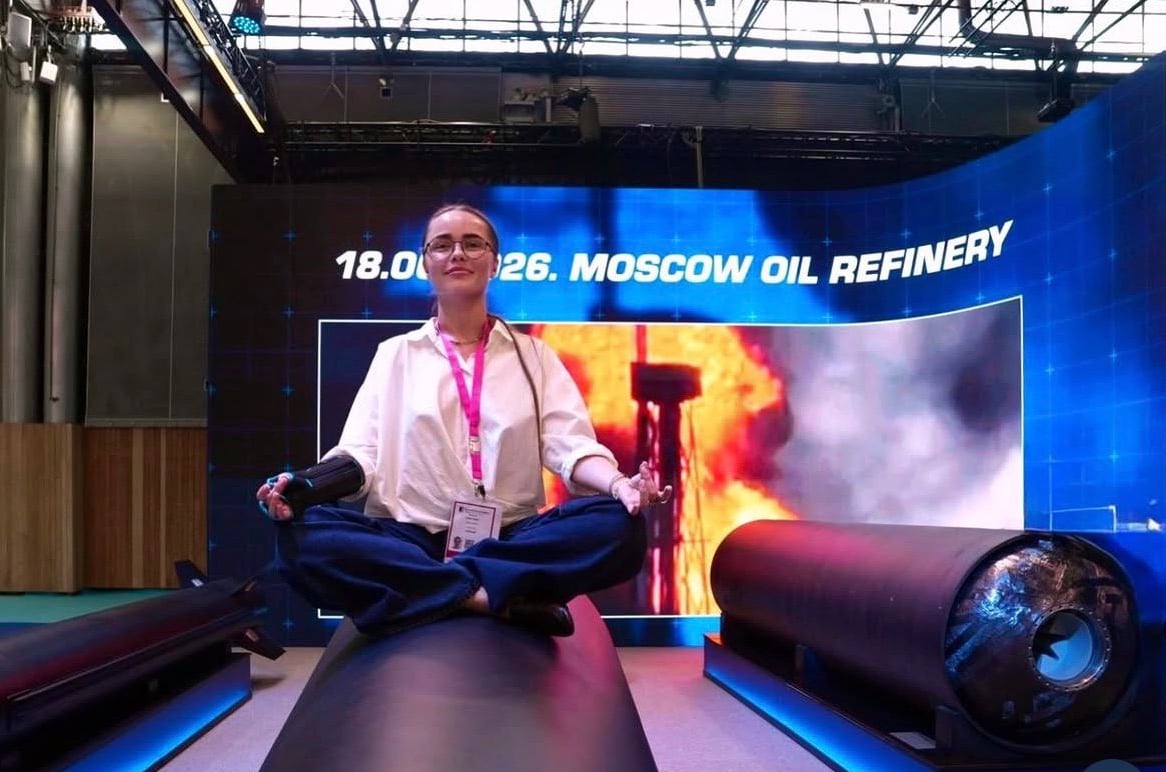
Iryna Terekh, CEO and CTO of Fire Point, a Ukrainian weapons manufacturer, sits on top of a display at a defence convention in Paris on Friday. The company’s booth included video of the strikes its drones helped carried out on a Moscow refinery a day earlier. (Submitted)