

The Bank of Canada has maintained its interest rates since July 2023.
While it is generally anticipated that there will be another pause next week, an increasing number of economists and market traders are now expecting the central bank to raise its benchmark rate to curb persistent inflation.
The policy rate has remained unchanged at 2.25 percent following a quarter-point reduction in October 2025.
However, Bank of Canada Governor Tiff Macklem recently cautioned that an increase in borrowing costs may be necessary if energy prices stay high, stating on Saturday that there is “no resolution in sight for the conflict in the Middle East” which has disrupted global energy markets over the last several months.
On Monday, the newest inflation statistics from Statistics Canada highlighted the surge in energy prices. The report indicated that rising fuel costs have not yet significantly affected other economic sectors. Nevertheless, the latest survey from the Bank of Canada, also issued on Monday, revealed that businesses are preparing for increased prices.
The prevailing view in a recent Bloomberg survey still suggests a hold on rates, but this week, the Bank of Montreal, RBC Dominion Securities, and Desjardins Group have revised their forecasts for October 28 from a hold to a potential hike.
Data from Bloomberg indicates that traders in the overnight swap market are now estimating an 87 percent probability of a 25-basis point rate increase from the Bank of Canada next week, a rise from 70 percent earlier this week. Swap market data reflects the difference between current interest rates and the future rates traders expect.

Derek Holt, the head of capital markets economics at Scotiabank, is among those advocating for a rate increase.
“It’s not a guaranteed decision, but there seems to be sufficient evidence to support a hike,” he noted in a research report on Monday.
Economist David Doyle from Macquarie Group concurs, forecasting that the Bank of Canada will raise its policy rate by 125 basis points by the conclusion of 2027.
“Our baseline scenario continues to indicate a rate increase at this month’s meeting,” he mentioned in a note to clients on Monday. “We foresee a steady cycle of rate hikes ahead.”
Leah Zlatkin, a licensed mortgage broker and expert analyst with LowestRates.ca, shares a similar view.
“If a rate hike occurs, I believe it will initiate a cycle,” Zlatkin stated.
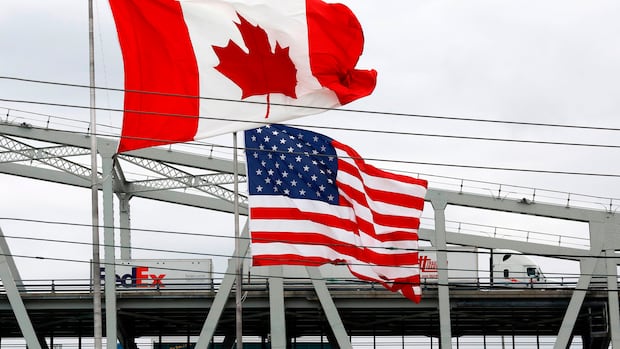
Canada’s economy has shown resilience in the face of punishing U.S. tariffs, but new import bans on a range of Canadian products are creating further drag. Accounting firm Deloitte has lowered its growth forecast for next year by 20 per cent.
‘Massive’ impact on real estate
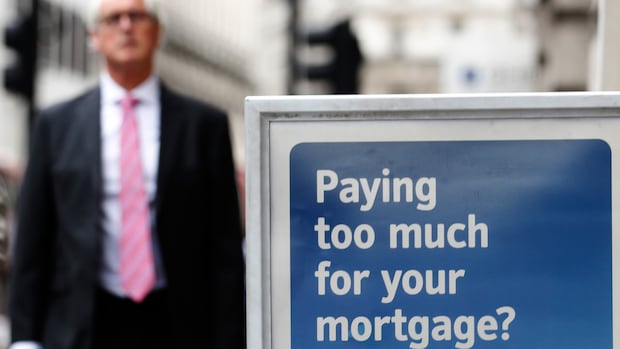
An increase in rates would greatly affect the struggling real estate market in the country, according to experts in mortgage and debt. Immediate increases in payments on variable-rate mortgages would occur, along with rising rates for new fixed mortgages if bond market investors anticipate further rate hikes. This would reduce the pool of qualified buyers, transferring leverage from sellers to those who can secure the necessary financing to make a purchase. Consequently, home prices could decline.
“The housing market is currently in a precarious position, and increasing rates is akin to throwing an anchor to someone who is drowning,” remarked Scott Terrio, a manager of consumer insolvency at Ontario’s Hoyes Michalos & Associates.
He stated that a hike “would have massive repercussions.”
According to Ben Rabidoux of Ontario’s Edge Realty Analytics, the total number of home sales nationwide is presently at a 25-year low.
He characterizes buyer confidence as “incredibly weak,” due to multiple economic uncertainties, including the trade war between Canada and the U.S. and the effects of AI on employment.
-
CREA dials down home sales forecast for 2026 again
-
Inflation rises to 3.1% in September, as fuel prices push higher: StatsCan
“The fact is, when examining per capita home sales, we have already returned to levels seen in the 1990s, which was characterized by a severely challenging recession,” he mentioned.
If interest rates begin to rise, Rabidoux predicts a gradual decline in home prices “over the next three to six months is very likely.”
Last week, the Canadian Real Estate Association revised its forecast for home sales in 2026 downward for the third consecutive quarter.
The industry organization cited a “noticeably more hawkish stance from the Bank of Canada,” as it projected 444,530 homes to be sold by the end of the year, reflecting a 5.2 percent decrease from 2025.
Recently, home prices dropped in the notoriously high-cost Toronto region, which Zlatkin, the mortgage broker, identifies as an indication that now could be a “good time to buy.”
“There is a chance [that] housing prices will keep falling, but the truth is, if you qualify for a property today, you will still qualify later even if rates increase.”