

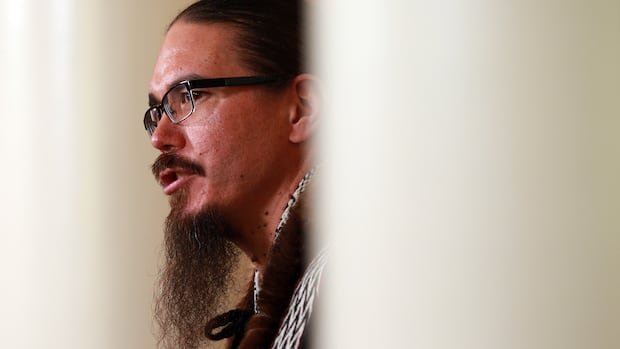

A group of First Nations representatives from British Columbia visited Calgary to deliver a direct message to pipeline industry leaders: abstain from investing in a new bitumen pipeline to the northwest coast or face an extended legal battle.
Jason Alsop, the President of the Haida Nation, also known as Gaagwiis, emphasized the duty to protect the ocean and its role in food security. He warned that crude tankers traversing northern B.C. waters would jeopardize these vital resources.
Referring to the successful opposition against Enbridge Inc.’s Northern Gateway project years ago, Chief councillor Arnold Clifton of the Gitga’at First Nation highlighted the united front Indigenous communities could present against such proposals in the future.
The delegation engaged in discussions with senior executives from Pembina Pipeline Corp. and Trans Mountain Corp. in Calgary. While Pembina Pipeline focuses on natural gas transportation and is collaborating on a LNG project, Trans Mountain operates an existing pipeline linking Alberta’s crude to the Vancouver region.
Trans Mountain’s CEO, Mark Maki, met with the First Nations leaders and acknowledged the importance of understanding their perspectives. On the other hand, Pembina Pipeline did not provide a comment following the meeting.
The First Nations representatives extended invitations to other oil and gas pipeline companies and advised them of the risks associated with supporting a B.C. oil pipeline. The Alberta government is preparing to submit a proposal for a B.C. pipeline to the federal major projects office, aiming to facilitate private sector involvement.
The Alberta government’s energy accord with the federal government outlines plans for a new B.C. pipeline alongside a significant carbon capture project in Alberta. The preferred end point for the pipeline is Prince Rupert, although considerations for a southern route to Vancouver have been raised.
Hereditary Chief Darin Swanson of the Haida Nation, also known as Ginaawaan, emphasized the irreplaceable value of their pristine beaches and marine life, underscoring that no monetary benefit would justify the risks associated with a bitumen pipeline and tanker port.