

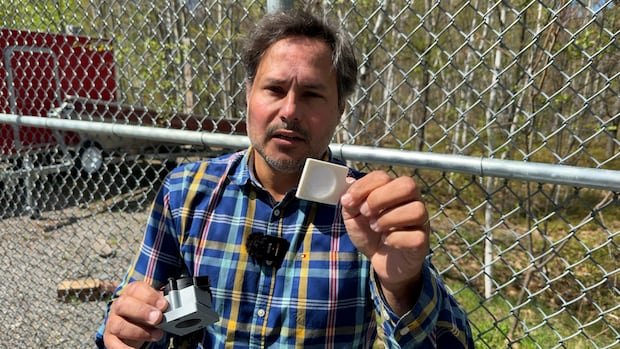

A researcher from Laurentian University is embarking on a unique project utilizing honey bees to aid in environmental restoration efforts at the Côté Gold Mine near Gogama, Ontario. Mateus Pepinelli secured a $100,000 grant from IAMGOLD to collaborate on a two-year research endeavor. Honey bees will be enlisted to gather environmental DNA from reforested areas surrounding the mine site, acting as research assistants by collecting crucial data. Pepinelli, along with a team from IAMGOLD, will set up three apiaries this summer near the remediation zones. Each apiary will feature a small fan with a filter to capture DNA traces brought in by the bees, allowing for comprehensive ecological insights. The filters will be collected, and the environmental DNA extracted for further analysis in a lab.
Jessica Tratnik, IAMGOLD’s environmental and social governance lead at the Côté Gold Mine, emphasized the significance of the data retrieved from the bees in monitoring the progress of rehabilitation efforts. The information obtained will enable a better understanding of ecological changes, aiding in the assessment of plant species diversity and pollination patterns. Tratnik highlighted the efficiency of using bees as consistent monitors of environmental changes over time, providing valuable insights not easily observable through direct observation. IAMGOLD’s vice president of investor relations, Graeme Jennings, mentioned the long-term perspective of the Coté Gold Mine, emphasizing the ongoing nature of land rehabilitation efforts. Tratnik stressed the importance of continuous rehabilitation practices to expedite the return of impacted areas to their natural state, rather than waiting until the end of production.