

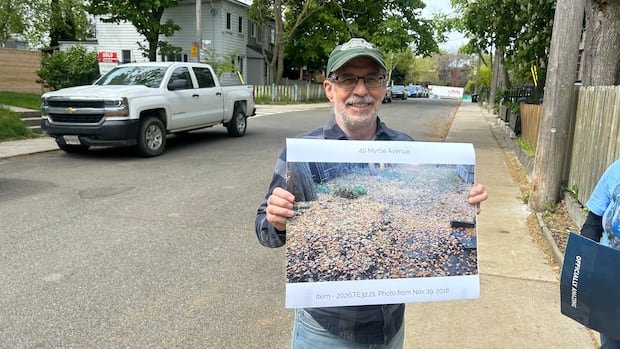

In Toronto, a non-native tree that has become common is causing issues for residents. Alan Page, a long-time homeowner in Leslieville, has been dealing with a ginkgo tree in his backyard that has started producing sticky and smelly fruit each fall. The residue from the fruit is difficult to clean and attracts insects like bees and wasps, leading to concerns for residents.
Despite the tree being healthy, residents have been seeking permission to remove them due to the unpleasant odor of the fruit, which has been likened to a mix of dog waste and vomit. Page’s request to remove the tree was denied by city forestry staff, and his appeal is currently under review by the Toronto and East York Community Council, with staff recommending against its removal.
Coun. Josh Matlow has raised the issue at the council, highlighting the challenges faced by homeowners dealing with the foul-smelling fruit of ginkgo trees. Arborists estimate that there are thousands of ginkgo trees in the city, with the female trees now reaching maturity and producing fruit, causing distress for residents.
While the city aims to increase its tree canopy coverage to 40% by 2050, strict regulations require permits for tree removal, even on private property. Matlow is pushing for a review of the rules regarding ginkgo tree removal to address the current concerns faced by homeowners.
Neighbors like James Chiu, who supports Page’s appeal, have also been affected by the ginkgo tree fruit, leading to unpleasant smells and attracting wildlife. If granted permission to remove the tree, Page has committed to planting five new trees in its place. Arborists advise residents to appreciate the benefits of trees like shade and wildlife habitat while finding ways to cope with the challenges they present.