

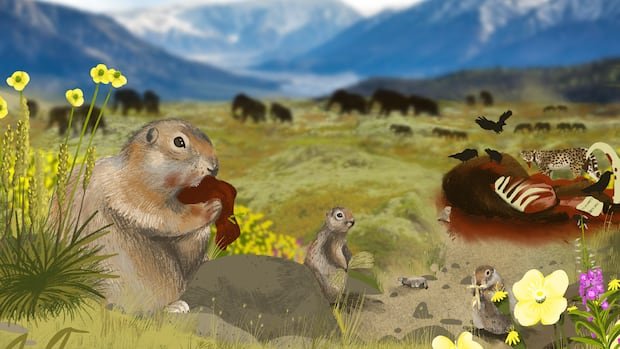

A study published in Nature Communications reveals that researchers have reconstructed the genomes of various ancient animals, including woolly mammoths, horses, steppe bison, and ground squirrels that inhabited the Canadian Arctic during the last ice age. The DNA used for this reconstruction was extracted from frozen squirrel feces discovered in the Yukon region.
The coprolites, or fossilized feces, contained DNA from a diverse range of animals such as wolves, cats, mammoths, horses, birds, bats, grasshoppers, and parasitic worms, along with approximately 200 plant species like sages and sedges. Tyler Murchie, a scientist at the Hakai Institute and the lead author of the study, stated that this DNA analysis unveiled a comprehensive picture of the ancient ecosystem, encompassing megafauna, plants, fungi, insects, and various microbes.
Ground squirrels in the Arctic, serving as inadvertent archivists, have been creating burrows with designated toilet chambers for thousands of years. These burrows, filled with preserved fragments collected by squirrels between 30,000 and 700,000 years ago, are being eroded along river valleys. The remnants found in these burrows include a wide array of items like plants, bones, and insects, indicating the dietary habits of these ancient squirrels.
Surprisingly, the analysis of the squirrel feces revealed DNA traces of mammoths and horses, indicating the omnivorous diet of the squirrels. The study highlights the unique capability of the coprolites to preserve DNA better than bones or sediments, leading to unexpected insights into the ancient ecosystem and dietary preferences of these creatures.
Furthermore, the DNA analysis unveiled that the majority of the feces originated from relatives of present-day Arctic ground squirrels in the Yukon, suggesting a distinct population or species. The study also demonstrated the stability of plant and animal species in the dry mammoth steppe grasslands of eastern Beringia over a span of 700,000 years during the Pleistocene epoch, contrasting with the current boreal forest ecosystem in the region.
As researchers delve into the past ecosystems to understand the impacts of climate change, the rapid thawing of sites containing these ancient archives poses a significant challenge. The study underscores the urgency of preserving these invaluable records before they are lost to the effects of climate change.
Experts in the field, like Danielle Fraser and Prof. Kurt Kjær, acknowledge the significance of these findings in providing insights into ancient ecosystems and evolutionary history. The study was made possible by funding from various organizations, including the Tula Foundation, CANA Foundation, Belmont Forum, BioDiversa, the Natural Sciences and Engineering Research Council, and University of Alberta Northern Research Awards.