

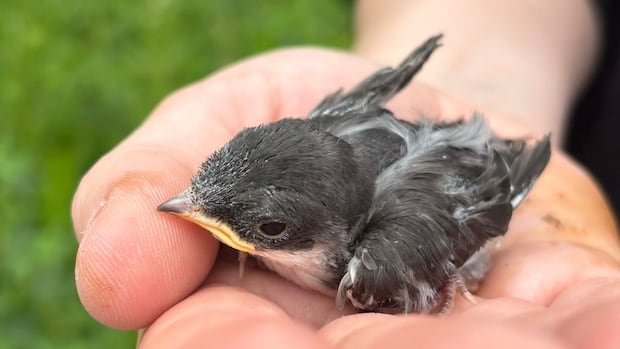

Long Point Bird Observatory, situated on a 40-kilometer sandspit near Lake Erie in southwestern Ontario and designated a UNESCO Biosphere Reserve, is a vital wildlife sanctuary. As the oldest continuously operating bird sanctuary in North America, it faces challenges due to climate change affecting its inhabitants.
Recent research published in the Proceedings of the National Academy of Sciences reveals concerning trends at Long Point. Since 1969, tree swallows in the area have been laying fewer eggs and diminishing in size. Aerial insectivores, like tree swallows, have declined by 43%, while insect numbers have plummeted by over 60% since 1977. The study, conducted by researchers from the University of Michigan and Birds Canada using data from Long Point Bird Observatory, sheds light on these alarming changes.
Lead author Charlotte Probst, a PhD student at the University of Michigan’s School for Environment and Sustainability, emphasizes the significance of tree swallows as a model species for research. These cavity-nesting birds allow for non-invasive monitoring of their nests, aiding in studying their reproductive patterns.
The study highlights a timing mismatch caused by climate change, with insects emerging earlier due to rising temperatures. This shift creates a disconnect between the birds’ breeding and migration timing and the peak availability of food, termed as a phenological mismatch.
Matthew Fuirst, a research ecologist at Birds Canada, notes that lower insect abundance negatively impacts the condition and size of both nestlings and adult swallows. This trend, observed since 1977, is exacerbating the mismatch in timing by more than three days per decade.
Additional research by Hadil Elsayed from York University corroborates the impact of changing insect phenology on tree swallows. Insect populations are declining, with insects emerging ahead of the birds’ arrival, compounding the challenges faced by the avian community.
Despite the global issue of climate change, local actions can mitigate insect declines. Planting native wildflowers, reducing pesticide usage, and preserving habitats for insects are among the recommendations to support bird populations. Acknowledging the interconnectedness of ecosystems, these local efforts can reverberate positively throughout the food chain.