

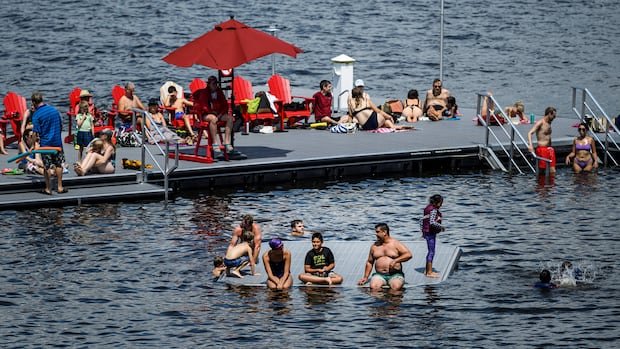

Amid a surge of drowning incidents in Europe due to an extreme heat wave, advocates in Canada are emphasizing the importance of safety during summer activities and are calling for increased public access to swimming areas nationwide. Recent reports from France revealed that 40 individuals lost their lives within days while seeking relief from temperatures exceeding 40 degrees Celsius, with similar tragic incidents occurring in Germany during the heat wave.
Canada is bracing for its own heat wave this week, with regions in Ontario and Quebec expected to experience temperatures in the mid-30s. Lenea Grace, the executive director of the Lifesaving Society of BC & Yukon, warned that despite the allure of bodies of water during hot weather, there are hidden dangers such as currents, undertows, and submerged obstacles like logs that can pose serious risks, especially in unfamiliar water settings.
Grace highlighted the importance of swimming in areas with lifeguards, exercising caution around water bodies with potential hazards, and ensuring that children are supervised closely. She also advised individuals without strong swimming skills to wear life jackets while boating. The recent data indicates that there have been 92 drowning incidents in Canada as of June 29, with higher numbers reported in British Columbia and Ontario compared to the same period last year.
In response to the need for safer water access, the mayor of Verdun in Montreal has called for enhanced security measures around waterways following a recent drowning incident near Verdun Beach. Gregary Ford, vice-president of Swim Drink Fish, emphasized the surge in outdoor activities during heat waves, leading many to explore public swimming areas for the first time. The organization’s Blue Flag program recognizes 13 beaches in Canada for meeting stringent criteria in environmental education, water quality, and safety standards.
With rising global temperatures, Ford stressed the importance of “blue spaces” as natural cooling zones to combat the effects of climate change. Matthew Sykes, co-founder of the Swimmable Cities Initiative, highlighted the need for comprehensive swimming infrastructure in cities to ensure public safety and health. Ottawa has become the first Canadian city to endorse the Swimmable Cities Charter, committing to enhancing access to safe water environments for its residents.
Ensuring water cleanliness is crucial for safe swimming experiences, with bacteria posing significant risks. Swim Drink Fish’s Swim Guide offers real-time information on water quality at various locations in Canada and globally. Lynn Wharram, leading the Blue Water Task Force in South Vancouver Island, monitors water safety by testing for bacteria levels, particularly after heavy rainfall or in stagnant water conditions. Concerns over blue-green algae contamination in lakes due to warming temperatures and pollutants highlight the importance of water quality management.
Technological solutions are being explored to restore swimmability to affected areas, such as the implementation of an oxygenation system in Elk/Beaver Lake in Vancouver Island to mitigate algae blooms and improve water quality. Wharram cautioned against risky behaviors like cliff jumping and swimming far from shore, urging individuals to stay cautious and prioritize safety, especially during the summer heat.