

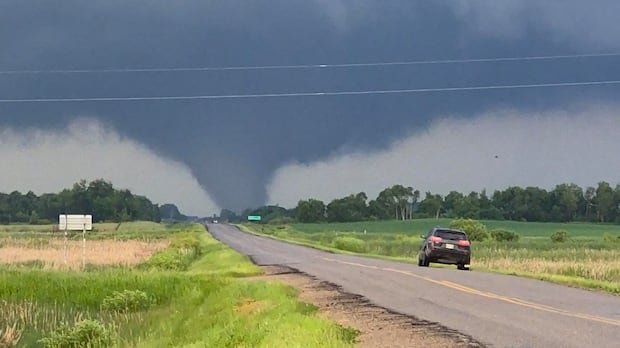

Federal budget cuts to a weather radar research team are expected to hinder weather forecasters’ ability to detect approaching tornadoes, according to a University of Manitoba atmospheric science professor. Despite a $180 million investment a decade ago to deploy 33 new advanced weather radar systems across Canada, the issue lies in outdated software and algorithms used by forecasters to interpret radar data.
John Hanesiak from the University of Manitoba emphasized that the problem does not lie with the new radar technology but with the inadequate tools available to forecasters due to the dismantling of a specialized team dedicated to radar research. This loss of expertise may prevent necessary enhancements to the software and algorithms crucial for accurate weather predictions.
Hanesiak, along with eight other weather researchers, penned a letter to Federal Environment and Climate Change Minister Julie Dabrusin in April expressing concerns over the dissolution of the weather radar research group operated by Environment and Climate Change Canada. This group played a vital role in maximizing the effectiveness of the national weather radar network to mitigate risks and reduce casualties, injuries, and property damage.
In response, Dabrusin mentioned that the federal government had identified efficiencies through a comprehensive expenditure review to enhance scientific services. However, she assured that the government remains committed to maintaining the current radar network by providing the necessary scientific and technical support.
Despite assurances from Environment Canada that operational radar imagery and data access for meteorologists remain unaffected by changes in radar research activities, concerns persist. Winnipeg City Councilor Janice Lukes emphasized the importance of timely alerts, especially in the aftermath of a tornado that struck the Whyte Ridge area without any advance warning.
Lukes highlighted the community’s reliance on weather alerts issued through the Alert Ready system, managed by Environment and Climate Change Canada. Although the agency issued severe thunderstorm warnings before the tornado hit Whyte Ridge, residents and officials were left questioning the lack of specific tornado alerts.
According to Environment Canada, while radar systems can provide insights into storm structures and wind patterns that may indicate tornado formation, predicting tornadoes accurately remains challenging, especially with outdated software and algorithms. Hanesiak stressed the urgency of upgrading these tools to fully leverage the capabilities of the new radar systems and enhance forecast accuracy.
The U of M professor underscored the necessity for ongoing improvements to software and algorithms to empower forecasters to interpret data effectively. Despite the forecasters’ expertise, Hanesiak emphasized that outdated technology is limiting their potential to provide accurate and timely weather alerts.