

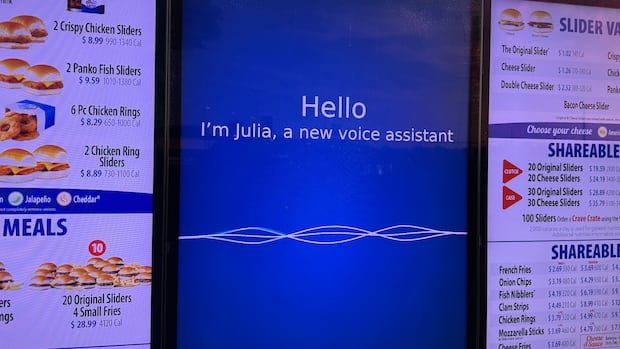

A bustling drive-thru in a suburban area of Detroit may seem typical at first glance, but upon closer inspection, the voice taking orders is not human—it’s artificial intelligence (AI).
Fast-food chains throughout the United States are increasingly turning to AI to manage their drive-thru operations, with the potential for this technology to expand to Canada. Companies are touting the improved accuracy of AI systems compared to human employees, although concerns have been raised by some labor advocates regarding the potential displacement of fast-food workers.
Although AI drive-thrus made their debut as early as 2021, initial pilot projects encountered challenges. Some customers deliberately tested the AI by making unusual requests, while others grew frustrated with errors or persistent upselling attempts by the chatbots. Despite these hiccups, recent advancements in voice AI technology have led many fast-food chains in the U.S. to implement chatbots at their locations.
Notably, McDonald’s is currently testing a Google-powered AI drive-thru system, while Taco Bell has collaborated with Nvidia for their chatbot solutions. Companies specializing in custom voice AI agents, like Presto and SoundHound, suggest that chatbots could soon be introduced at Canadian drive-thrus, although specific plans have not been confirmed by all fast-food companies.
One such example is White Castle, which partnered with SoundHound to develop an AI chatbot named Julia. This chatbot listens to customer orders, provides answers to questions, and displays the orders for preparation by staff within the restaurant. In cases of issues, an employee can intervene and complete the order seamlessly.
White Castle store manager Denise Harley shared that initial challenges with the AI chatbot were resolved, leading to improved order efficiency. The chatbot has enabled quicker order processing, with newer staff members accustomed to working alongside AI as a seamless part of the team.
Customer feedback on AI drive-thrus outside White Castle in Detroit has been mixed, with some praising the convenience and others expressing reservations about the technology’s efficacy. While acknowledging that the technology is not flawless, White Castle’s chief marketing officer, Jamie Richardson, emphasized that data indicates the AI achieves accurate orders over 90% of the time, surpassing previous levels of accuracy.
The implementation of AI drive-thru systems, such as Julia, at White Castle locations has resulted in reduced wait times and enhanced operational efficiency. Richardson emphasized that the intention behind adopting AI technology is to increase productivity rather than reduce employment opportunities.
Given the ongoing labor challenges faced by the fast-food industry, including cost escalations and high turnover rates, AI is being viewed as a potential solution to address these issues. Companies like SoundHound, which developed Julia, highlight the revenue-boosting potential of AI in upselling to customers and enhancing overall operational efficiency.
Industry experts predict a significant rise in the adoption of voice-enabled drive-thru systems in the coming years, with the potential for AI to become a standard feature at all drive-thru locations. The World Economic Forum projects that certain job roles, such as cashiers, may experience rapid declines due to automation, prompting concerns from labor advocates regarding the impact on young workers seeking entry-level positions.
Advocates like Siobhán Vipond from the Canadian Labour Congress emphasize the importance of inclusive discussions involving governments, workers, and unions in the design and implementation of AI systems in workplaces. Vipond stresses that employers have a responsibility to consider the implications of rapid technological changes on workers and communities.