

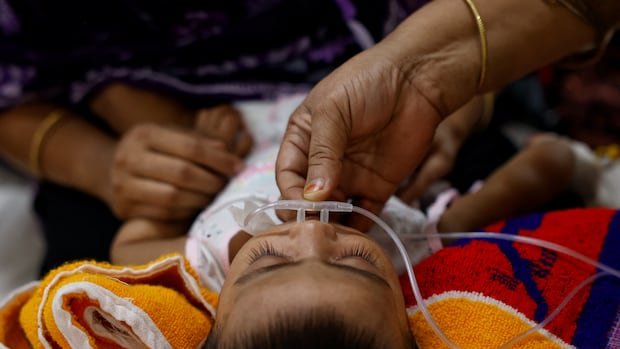

In the midst of recent Hantavirus and Ebola outbreaks grabbing headlines, Bangladesh is grappling with a significant infectious disease crisis that is particularly impacting children.
Once lauded for its success in eradicating measles, Bangladesh is now facing its most severe outbreak in decades. The country’s health ministry has reported over 60,000 suspected cases of measles nationwide, with over 500 children confirmed or suspected to have died from the disease.
Emmanuelle Abrioux, Deputy Representative of UNICEF in Bangladesh, expressed deep sorrow over the situation, emphasizing the preventable nature of measles and the devastating consequences it is having.
Measles, known for its high contagion rate through respiratory droplets, can be effectively prevented with two doses of vaccine. However, it remains a leading cause of death among young children worldwide, especially those under five who are unvaccinated or only partially immunized.
The surge in measles cases in Bangladesh this year has resulted in at least 86 confirmed deaths and an additional 426 children displaying symptoms consistent with the disease. UNICEF suspects the actual death toll among children could be much higher.
Factors contributing to the outbreak include a decline in vaccine uptake in recent years, partly due to vaccine hesitancy. The disruption of immunization services during political instability in 2023 and 2024 further exacerbated the situation. Additionally, a change in vaccine procurement methods in 2025 led to supply-chain issues, causing vaccine shortages and hindering immunization efforts.
To address the crisis, Bangladesh has initiated a massive child vaccination campaign in collaboration with UNICEF, WHO, and the Gavi Vaccine Alliance. The campaign aims to vaccinate over 17.8 million children aged six months to five years with a target coverage of at least 95%. The government has also implemented rapid response teams, enhanced disease surveillance, and increased vitamin A distribution to mitigate undernutrition-related complications.
While progress has been observed in high-risk districts targeted by the campaign, overall reduction in measles transmission rates across the country is still a work in progress. Abrioux emphasized the gradual improvement but highlighted the ongoing challenges in curbing the outbreak.